Digital Platform Labor Rights: Mensakas, the Courier-Owned Platform Cooperative in Barcelona.
mix media • 2020

2019 was a year of explosive growth for food delivery services in Taiwan. Foodpanda’s order volume alone surged 25-fold. Like magic, a few taps on a screen bring a variety of food right to your doorstep. This has become daily life for urban dwellers worldwide, including those in Taiwan. While the development of the Internet of Things (IoT) is still ongoing, it has already fundamentally reshaped our consumption habits and even the livelihoods of many.
2019 was not only the year the delivery market exploded but also the year two couriers tragically lost their lives while rushing to fulfill orders. According to estimates from Taiwan’s Ministry of Labor, there are approximately 80,000 delivery couriers in Taiwan, with 50,000 registered under Foodpanda and UberEats alone. Last October, three major traffic accidents—some fatal—involving couriers occurred within four days, thrusting the issue of the “employer-employee relationship” into the spotlight. The Ministry of Labor subsequently ruled that the relationship between couriers and delivery companies is one of employment, requiring companies to provide labor insurance and vocational training. Simultaneously, Foodpanda began reducing delivery bonuses every half-month, sparking several strikes by couriers across Taiwan.
In fact, the predatory strategies of the platform economy, often marketed as “sharing” or “win-win” scenarios, are a global phenomenon not unique to Taiwan. Consequently, collective movements to fight for gig workers’ rights have been underway worldwide for some time.
The Platform Economy is Global; So is the Fight for Labor Rights
It was a demoralizing night in Barcelona. Torrential rain made riding dangerous. Txiki Blasi, a soaked delivery courier, watched his app continue to ping with orders. Yet, this “digital boss” offered no instructions or warnings. They didn’t say, “It’s dangerous; we must stop working.” They did nothing.
The next morning, Txiki and Núria Soto, who lived in the same district, checked in on each other and decided they needed to take action. They exchanged contact information, and one by one, couriers began connecting through WhatsApp and Telegram groups. Worker solidarity began with these simple exchanges.
At the time, even those most deeply involved could not have predicted that their passion for cycling and street life, combined with digital platforms and the “cooperative economy,” would lead them to found Mensakas—a worker-owned delivery platform cooperative—three years later.
Who Owns the World?
In 2019, scholars, activists, workers, designers, and engineers involved in global “platform cooperativism” (platform coop) since 2015 gathered at The New School in New York. The theme of that year’s conference was “Who Owns the World?”
Historically, “rent-seekers” were individuals or companies that extracted wealth from the use of vital resources like land, energy, or water. Today, a new form of rent-seeking has seized a resource that promises the largest and fastest accumulation of wealth in history: data. With the advent of smartphones and mobile networks, the internet has become the new commercial battlefield, where algorithms driven by data serve as the new “bosses” for platform workers.
Initiator Trebor Scholz noted in his opening remarks that this alliance now functions like a community-building hub. By collaborating with academic institutions, they are building a shared platform to identify the common needs of this ecosystem. Through policy groups, they advise governments. They have also established the Institute for the Cooperative Digital Economy (ICDE), offering online courses on scaling, fundraising, and blockchain, making these resources accessible to workers worldwide.
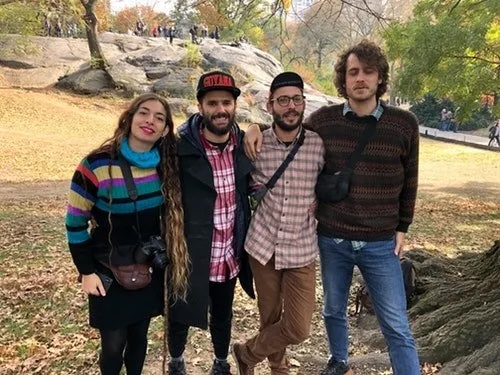
Among the participants in the conference were teams like CoopCycle from France, as well as delivery workers from the UK and Thailand, all seeking solutions to the current crisis. Barcelona’s Mensakas was one of the featured teams. Members like Oriol Alfambra, Txiki Blasi, and Núria Soto had all previously worked as couriers for Deliveroo.
Txiki’s eyes light up when he talks about street life and cycling. “But this is also why these platforms are called ‘innovative,’” he says. “They enter local markets as digital platforms, offering ‘self-employment,’ but they establish precarious systems that fundamentally change the nature of work for those who serve them.”
{%youtube 1ENlgOF5X9Y %}
Delivery platforms create an environment where taking orders feels like a game or a gamble. By bypassing traditional employment structures, they force workers to bear all the risks. They design systems for mutual reporting, turning workers into competitors, and lure them in with high bonuses only to gradually slash rewards—a global playbook for platform capitalism.
“The company began to control us. We started with zero knowledge of labor rights, but after studying and learning, we realized we must be recognized as employees. We need insurance for accidents to protect ourselves. Under the previous situation, if you broke a leg tomorrow, the company would simply say: ‘Great, since you’re self-employed, goodbye.’”
Riders x Rights: Fighting for Their Own Sovereignty
Barcelona’s unique political DNA, shaped by a history of resistance and autonomy, provided the backdrop for this movement. Modern Barcelona still sees many riots and protests, such as those regarding future policy directions, voting rights, and the status of Catalonia within Spain—reminiscent of the power struggles seen in Game of Thrones. This struggle continues today, with people imprisoned for organizing referendums or prosecuted as terrorists simply for defending polling stations.
Another slide in the presentation showed a photo of Barcelona from approximately 80 years ago.
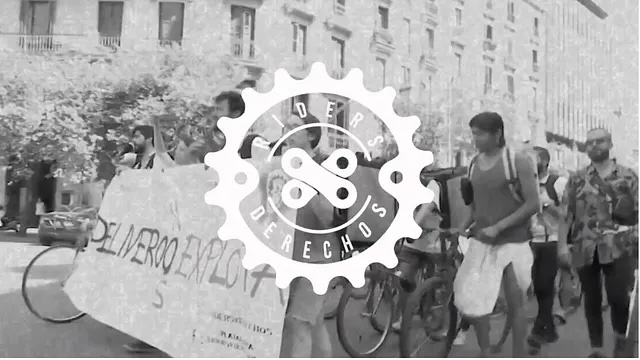 Video: Workers dismissed by Deliveroo formed their own cooperative (LABOURNET TV)
The 1936 Spanish Revolution took place in Barcelona. Factory owners and bosses fled to the fascist side, leaving workers in control. The workers converted factories into production lines for weapons to fight fascism. This is the starting point and the spiritual home of the collaborative platform.
In Spain, being self-employed requires paying high taxes that increase annually. Txiki and Núria, living in the same neighborhood, started with worker chat groups, eventually forming the “Riders x Rights” platform. When they first sought help from unions, the organizations weren’t sure how to categorize them, eventually finding a home with the iAC (Intersindical Alternativa de Catalunya).
“They helped us create a group and began collaborating with us,” Oriol explains as he began managing union cooperation and drafting demands. “We started asking colleagues one-on-one for their thoughts to see if they agreed with these demands to push the company for change. We knew that to achieve this, strikes were necessary. Solidarity is the only way to win, but striking is risky—you might not get paid, or you might lose your job.”
They knew some would avoid such risks, so unity was paramount. When the group sent their letter of demands to Deliveroo, the company offered no formal response, stating: “Since you are self-employed, there is no employer-employee relationship.”
A Victory for Delivery Workers
In 2018, a Barcelona court ruled in favor of the couriers in a collective lawsuit against Deliveroo. The court declared the dismissals invalid; the company was forced to reinstate the workers and pay their monthly wages, although they refused to let them actually work.
“We formally filed the lawsuit against Deliveroo in 2016. Some workers were too afraid to join for fear of losing their jobs. After two years of legal proceedings, we won.”
Txiki says: “Part of the success was luck in having a good judge who understood the problems workers faced. The union also provided immense support, including our demands in the proceedings and arguing that the company must hire us as formal employees.”
“But the company didn’t want that, because hiring us requires a contract, even though they claimed we were self-employed. So the company said, ‘We will pay you, but you won’t work.’ Currently, they must pay us €400 a month. In a way, you could say Deliveroo paid for our flights to this conference. They are paying us wages as formal employees; they have to acknowledge we are part of the company.”
The Birth and Growth of Mensakas — A Sustainable and Democratic Business Model The name “Mensakas” is actually Spanish slang for courier or messenger.
After the strike, the riders got to know each other, and Txiki, Núria, and Oriol decided to become founders. “We had no business experience; we were just workers. But we did our best, dividing into departments to develop the app. We had to self-organize, handle public relations, and plan. We raised €6,000 through crowdfunding as starting capital, then developed the name, branding, and business strategy to build the digital platform.”
They admit the process was one of learning from mistakes, aided by many supporters. They realized that staying open was crucial. “Managing public-interest finances is hard, and making money is hard. We started hiring and slowly learned how to run a team. Our initial funds were running out quickly, so we navigated the ‘how-to’ while operating departments and managing human relationships.”
Mensakas aims not only to be a worker-led platform but also to design fairer mechanisms, such as paying women 5% more to bridge the wage gap and optimizing routes to reduce the carbon footprint. Currently, Mensakas has 18 partners. Recently, they applied for the Barcelona City Council’s startup support program to officially launch their revamped app.
The Battle for the Future
For Núria, Mensakas is now like a family—a solution against the digital platform economy. They fight for the union and for their own organization; solidarity is everything. It is also about others facing the same issues.
Txiki hopes Mensakas becomes strong enough to be competitive in the market, helping others and becoming a key player. “The digital economy will continue to reach everywhere, entering every country to change laws, systems, and destroy what we have. A healthy public system relies on large companies paying taxes, but international firms like Deliveroo and Uber bypass this, undermining the working class. We have entered a high-tech world where we risk becoming ‘digital slaves’ because no one cares what happens to you.”
“Platform cooperativism allows participants from all over the world to become a family, realizing we are not alone. Together we grow stronger, and together we can fight them.”
References:
- Ministry of Labor Food Platform Courier Rights Protection Zone.
- Mensakas App Crowdfunding
- Núria Soto: “Deliveroo has no interest in talking about hiring us”
- Worker-Owned Apps Are Trying to Fix the Gig Economy’s Exploitation
- READr: “Journalist as a Courier: Unboxing the Secrets of Food Delivery!”
- “The Reminiscent Times Guest House” Episode 245: Does Labor Rights Hinder Innovation? How to Resolve Delivery Labor Disputes?
Originally published at https://www.thenewslens.com on March 18, 2020.