Together, Stronger — A Cooperative Solution for Arts and Culture Workers: An Interview with SMart Strategy Manager
18 March 2020
Fairly speaking, in an era where the problems of the gig economy are becoming increasingly prevalent, the demand for arts and culture work has never decreased, yet the labor conditions for these workers have long failed to see significant improvement. In recent years, numerous articles have discussed phenomena such as the “outsourcing” and “overworking” of practitioners in the arts and culture sector. Beyond forming unions or taking to the streets to fight for labor rights, what should the next step be?
In Taiwan, whether as artists or arts administrators, individuals in the arts and culture industry seem to have few options beyond working in the public cultural sector, joining private galleries, or operating within the grant application system. Otherwise, they become freelance workers, where issues such as low pay, self-exploitation, excessive working hours, and the burden of advancing funds or facing payment arrears are frequently heard of. Fairly speaking, in an era where the problems of the gig economy are becoming increasingly prevalent, the demand for arts and culture work has never decreased, yet the labor conditions for these workers have long failed to see significant improvement.
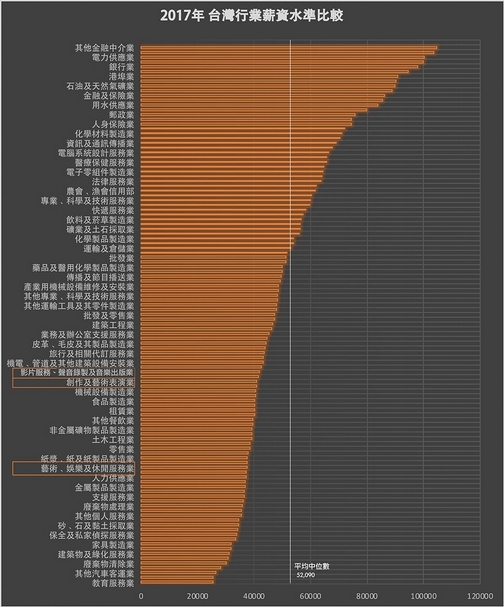 Comparison table of salary levels by industry in Taiwan, 2017. (Provided by the author)
According to statistics from the Directorate-General of Budget, Accounting and Statistics, the 2017 average income for the “Art, Entertainment, and Leisure Services” industry ranked 26th from the bottom out of 114 industries, with an average monthly income of NT$37,486. The “Creative and Performing Arts” sector averaged NT$40,945 per month, while “Motion Picture, Sound Recording, and Music Publishing” performed slightly better at NT$41,455. Compared to the highest-earning “Other Financial Intermediation” sector at NT$104,675, there is a staggering difference of NT$87,189. It is believed that for many arts volunteers and freelancers whose contributions are not counted in formal output values, incomes are only lower. In recent years, numerous articles have discussed phenomena such as “outsourcing” and “overworking” among practitioners. Beyond forming unions or taking to the streets to fight for labor rights, what should the next step be?
In fact, in Europe, organizing arts workers in the form of cooperatives has been practiced for many years. One famous success story is SMart (French full name: Société Mutuelle Pour Artistes), founded in 1998 with nearly 20 years of history. This organization, which originated in Brussels, Belgium, has now expanded to nine European countries. It is currently a community with over 200,000 members and an annual revenue of 150 million euros.
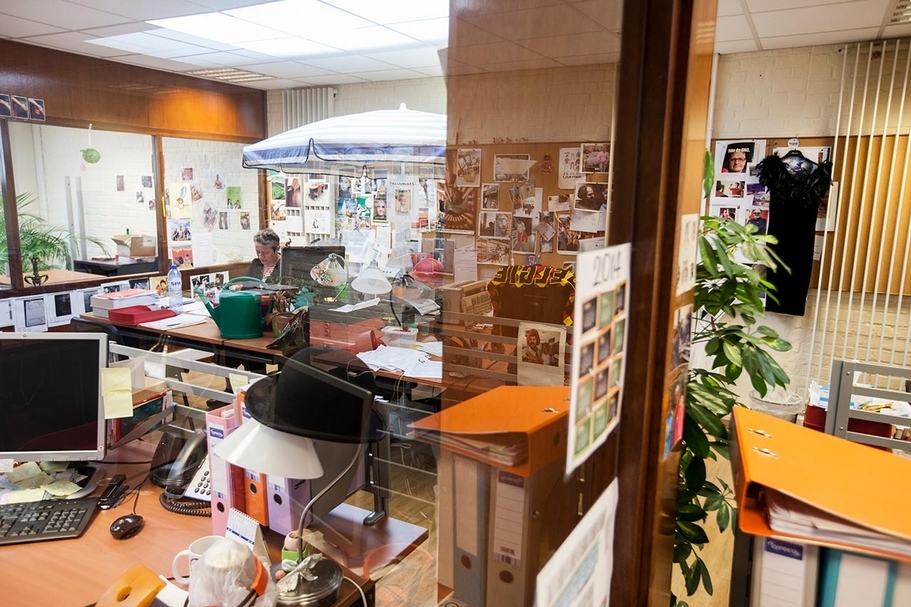 SMart office located in Saint-Gilles, Belgium. (© SMart)
A successful case of an arts labor cooperative?
It sounds almost unbelievable. On this occasion, I had the opportunity to interview Lieza Dessein, who has served as the Strategy Manager at SMart for six years. Starting as a professional consultant at SMart, she currently manages the development of creative hubs “Brussels Art Factory” (BAF) and “LaVallée.” Through these rich experiences, Dessein has mastered the impact of digitalization on the contemporary arts and culture work environment. While advocating for a fairer digital economy, she represents SMart in participating in the platform cooperativism movement.
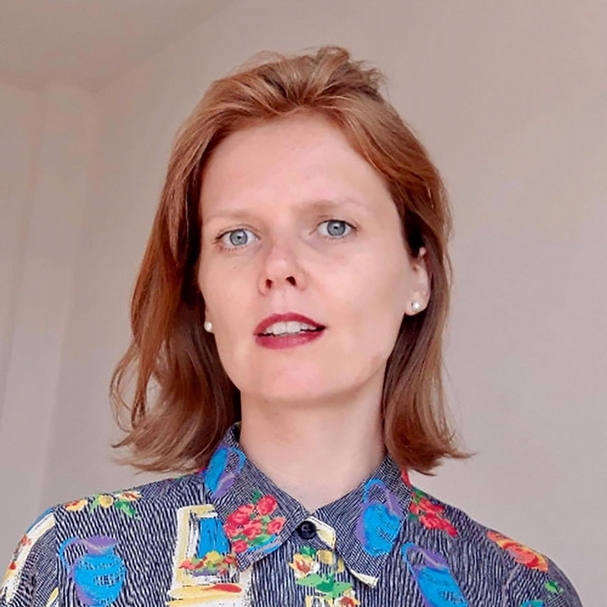 SMart Strategy Manager Lieza Dessein. (© SMart)
During the interview, Dessein introduced the development of SMart. The founding of SMart began when the founders realized that artists were facing an increasingly complex administrative and legal environment, making it harder for local artists to develop creative entrepreneurship and access social protection. In its early stages, SMart’s goal was positioned to solve these challenges through “mutualization.” The founders decided to use a shared company model to organize with these entrepreneurs, designing an organizational system to share inherent risks with their members — the “individual entrepreneurs.”
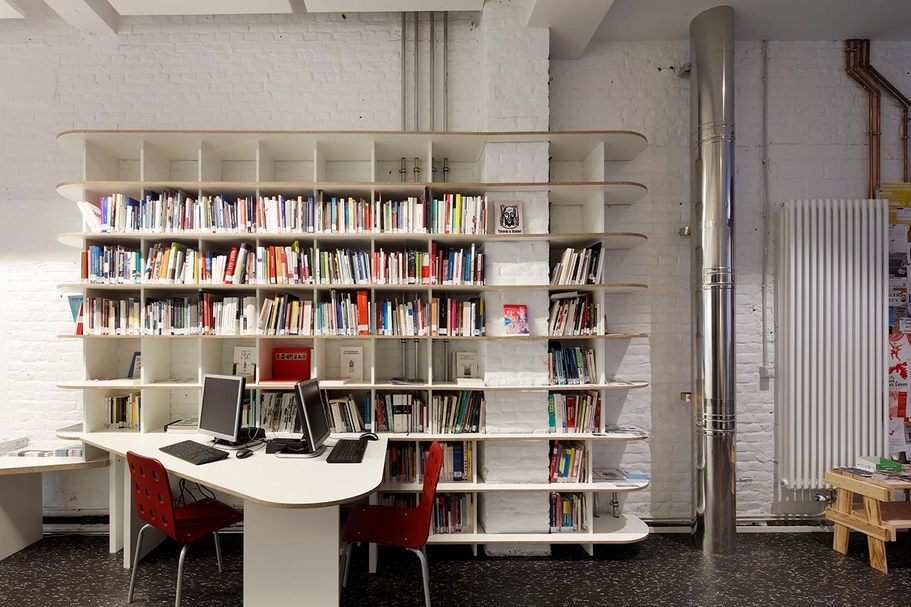
In plain terms, SMart solves social insurance issues for individual laborers who originally belonged to the “gig” economy by having them join the organization. Simultaneously, through the organization’s flexible financial and legal consulting systems, arts workers can focus more on their creative work. Unlike general freelance platforms like Upwork, Freelancer, and Fiverr, SMart chose to design its organizational structure in a fairer, more mutualistic way.
Initially, SMart set itself up as a non-profit organization, which was the easiest legal structure for them to establish. The company grew rapidly and organically, creating new services based on members’ needs. As the company expanded, they opened suitable legal structures related to the various services being developed. Currently, the overall operation of SMart is overseen by a foundation. When SMart began expanding its business to other European countries, they found the original system required more rational adjustments and chose the most appropriate laws to develop their activities. Ultimately, they transformed into cooperatives in most countries and adjusted the operational structure of the Belgian headquarters accordingly.
Members are not just artists; SMart has expanded to “smarter” services in recent years
“From the beginning, SMart provided financial and legal services for artists. Over the years, we realized that the tools we created for artists were also perfectly applicable to freelancers. Today, 50% of revenue comes from this service. Each time a member issues an invoice, 6.5% of the income goes to SMart. This amount covers operating costs and the ongoing provision of collective services. SMart has also managed to scale its business model through digital platforms.”
SMart’s current services can be divided into three major categories:
-
Management: Includes operating costs, personal consultants, insurance, legal advice, and training courses (associations, communication, authors’ rights). Importantly, every time a member takes a job, SMart becomes their employer.
-
Financing: Wage guarantee fund (all members are guaranteed to receive payment from their clients within seven days of work completion), debt collection, and micro-financing.
-
Innovative Services: Includes creative hubs, full-time contracts, European development, and political lobbying.
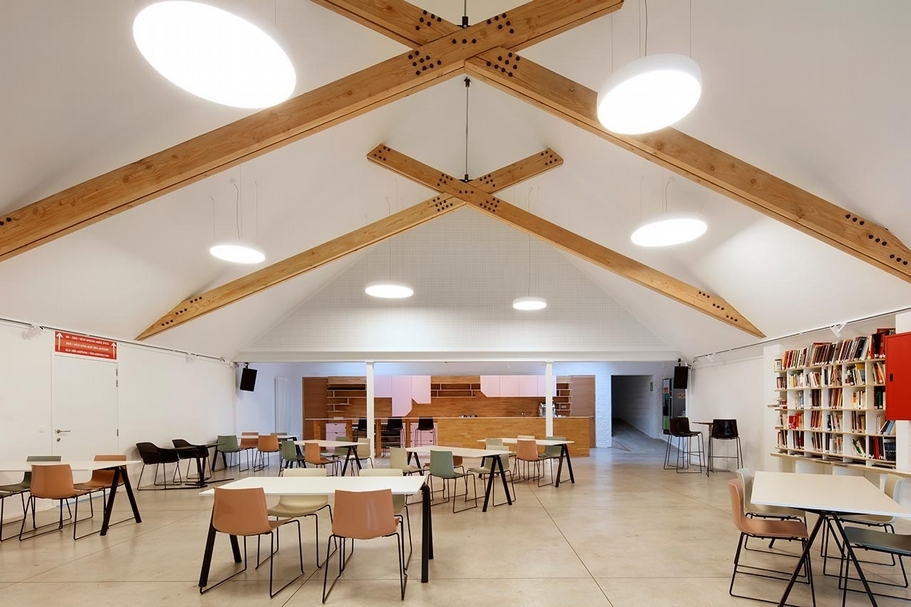 Caption: The SMart office in Saint-Gilles, Belgium, features a multi-use interior space, which also serves as the venue for the “LET’S COOP” forum. (© SMart)
Management Mechanism: Having a Dedicated Consultant
What does SMart’s legal department actually provide for artists? Dessein explained that in terms of management, the legal department currently advises members on agreements and external contracts. It also establishes partnerships between creative workers and lawyers to protect authors’ rights. If a member needs to handle issues more complex than general advice, they can access services at preferential rates.
Members joining SMart first receive professional training. “The most typical way to join us is to first attend a general information session. In this meeting, we explain what the cooperative does, how we operate, and outline how activities are carried out within the company. For many members, this is an initial introduction to the actual costs of taxes (VAT, social security contributions, and insurance). Then, if they wish to join our cooperative, they make an appointment with a consultant. During the appointment, they see how our system works for them, and the consultant becomes their personal advisor.” SMart also provides various training courses. Although not all courses are free, the prices are always very “democratic.” These courses include how to negotiate contracts, how to handle communication or social media, and how to make creative proposals.
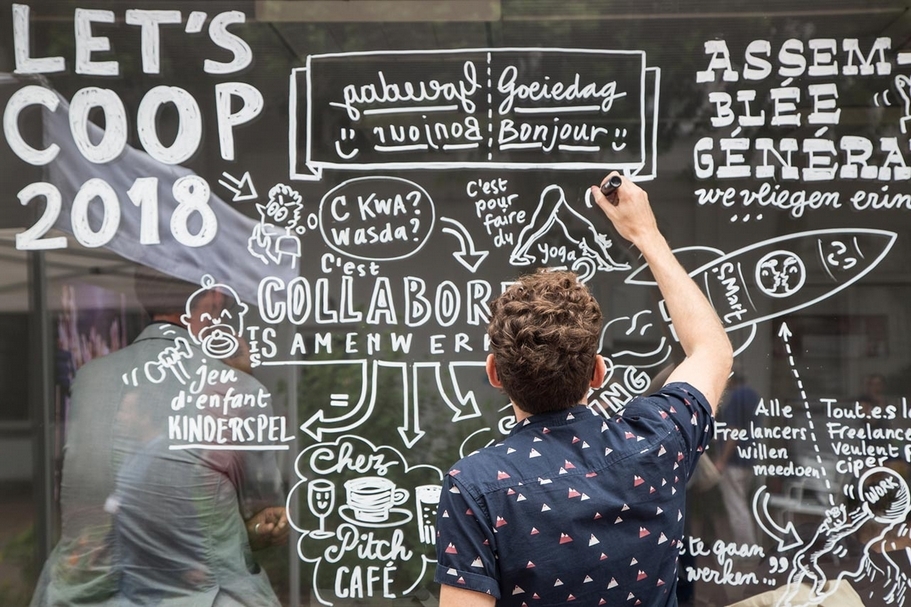
“LET’S COOP” is one of the regular events held by SMart. Activities include: roundtables, workshops, and debates on various topics such as cooperatives, the digital economy, platform cooperatives, the movement of the Commons, and participation and collaboration within shared enterprises. (© SMart)
Every member of SMart has an individual dedicated personal consultant. Dessein told me that each consultant serves an average of about 340 members. When I expressed surprise at how one consultant could handle communication for so many members, she explained: “Just as every doctor might serve hundreds of patients, our members only seek assistance from a consultant when they encounter a problem. Therefore, we are actually quite adept at handling members’ needs.”
Financial Policy: Obtaining Employee-like Protections
What impressed me most was that SMart has formulated a series of flexible financial management policies to handle financial issues for creative workers. When members take cases within the organization, the income returns to the organization. Dessein believes they handle such cases more easily than traditional banks. “Under the premise of establishing a good relationship between both parties, if an artist requests equipment, SMart’s evaluators will discuss the situation with the artist and consider whether such equipment expenditure is affordable based on their work status. Understanding that the need is reasonable, we sign a contract to protect the responsibilities and obligations of both parties.” Current members at the Belgian headquarters can obtain the best social security as employees. The shared company accepts each of our members through an employer-employee relationship, providing them with employee-like social protection.
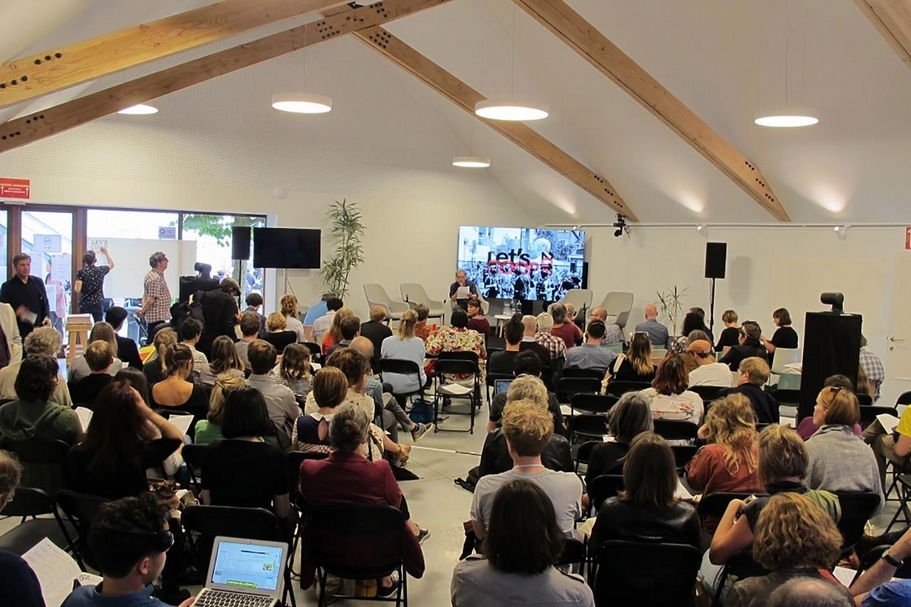
Caption: “LET’S COOP” is one of the regular events held by SMart. Activities include: roundtables, workshops, and debates on various topics such as cooperatives, the digital economy, platform cooperatives, the movement of the Commons, and participation and collaboration within shared enterprises. (© SMart)
Innovative Services: A New Type of Co-working Exchange Station
In recent years, SMart has further expanded its innovative services. They manage several spaces in Belgium. Dessein believes that most members grow organically within SMart’s development. Over the past decade, they have developed more complete management expertise in creative hubs and applied this expertise to “LaVallée,” a 5,000-square-meter former laundry factory in Brussels. Initially, the hope was to meet the artists’ constant need for a space that separates work and living areas—a place to drink coffee and exchange ideas with other arts and culture workers. During its development, LaVallée established a new set of operating mechanisms. Unlike typical co-working spaces, “all our residents have their own personal space (we do not use shared desks or hourly billing solutions). All these people have a ‘no-worries’ full-time usage contract. This is important because the purpose of these spaces is to build relationships among users, which takes time to accumulate slowly.”
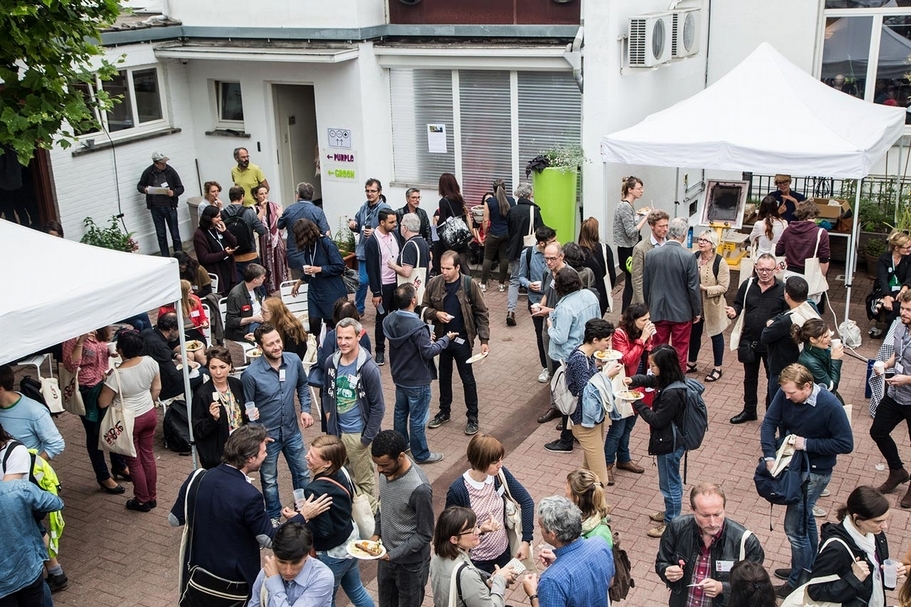 SMart also frequently holds joint activities in these spaces, giving members the opportunity to interact with each other. (© SMart)
Beyond casting a vote for politicians every few years, we have other choices
Most contemporary artworks explore problems generated by current social conditions; it is time to turn back and care for our own labor conditions. The famous social and feminist activist Rose Schneiderman once had a well-known slogan, delivered in 1912 in a small room in Cleveland when encouraging hundreds of female workers to organize: “The worker must have bread, but she must have roses, too.” If bread represents the purchasing power brought by wages, roses should represent having reasonable working hours so that we have the free time to lead the lives we want. These words serve as a call for people to realize that beyond casting a vote for politicians every few years, we have other choices. Through autonomy, we can find the key to a shared economy. Perhaps due to differences in social realities, we may not be able to achieve it all at once, but by understanding a successful case, we can perhaps better open our imagination and practical capacity to reclaim ownership.
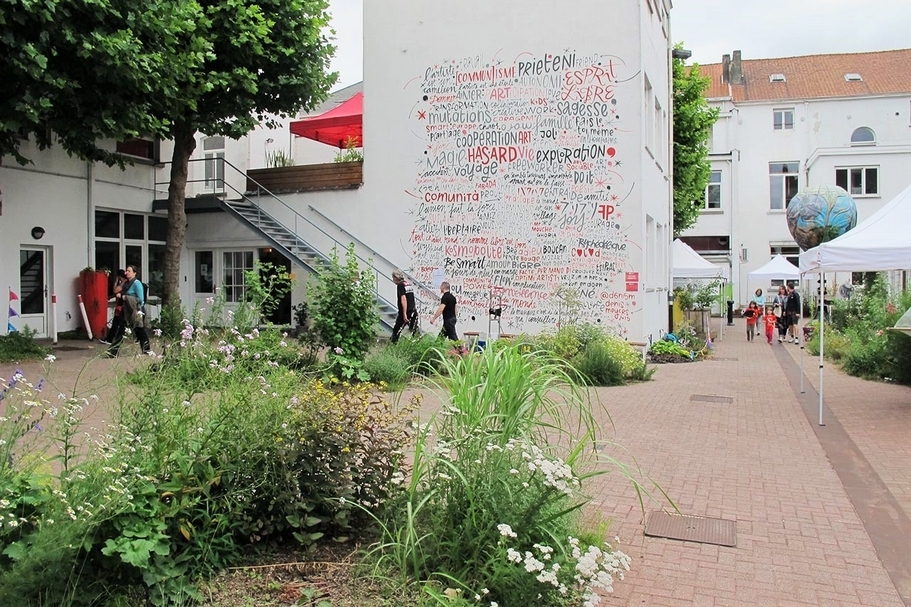 Caption: The exterior wall of the SMart office was completed collectively by artists from various countries using graffiti in their respective languages. (© SMart)