Nourish-scapes: Food, Belonging and Shared Inquiry
Nourish-scapes: Food, Belonging and Shared Inquiry
Reflections on the Pulse & Pickle Residency
During my three-week residency at Pulse & Pickle¹, I engaged in a process-led exploration of how feminist, collective, and research-driven artistic practices might take shape within a community-centred space that is still evolving. The residency offered time to slow down and pay attention—to working rhythms, shared questions, and the conditions that make collaboration possible.
My artistic practice grows from feminist urban research, community-based inquiry, and printmaking understood as a collective and political language. I usually work through long-term processes that value listening, conversation, and the careful translation of lived experience into visual and participatory forms. Entering this residency, I was interested in how these ways of working might shift when placed in a different social, cultural, and venue context. It will be a challenge for me to figure out how I can adjust to make the process go smoothly.
Community-Based Printmaking as Method
My approach has been shaped through ongoing collaboration with the printmaking collective Print&Carve Dept². Through exhibitions and workshops that address urban conditions, memory, and collective agency, printmaking gradually became more than a medium. It became a way of working together—one that supports shared authorship, dialogue, and collective reflection.
Before the residency, I read Collecting Tactics³ again, an essay written by Johnny. He previously visited Taiwan to meet the Print&Carve Dept. and took part in the Wenzaizun “The composition of Home” workshop. This article was written for his residency programme. He reflects on his experience of participating in the workshop and discusses how artistic practice can sustain community action and collective strength—ideas that continued to resonate with me throughout my entire Pulse & Pickle residency. The article explores how collective printmaking can support bottom-up processes of memory-making and political imagination, particularly within participatory workshops. These perspectives have provided valuable reference point on my working methods.
Alongside this, I joined online as a listener for the Time of the Rivers Fellows Sharing Session organised by Radical Ecology⁴. It emphasizes the lived experiences and resilience of communities affected by these projects, moving beyond simple environmentalism to address social and political dimensions. During the closing reflections, Pangrok Sulap⁵ co-founder Rizo Leong posed a question about whether future practices might take the form of community museums. This thought echoed earlier reflections from Collecting Tactics on community-based art reproduction, and helped me articulate my own curiosity about how artistic processes might remain open, shared, and rooted in place.
Developing the Workshops at Pulse & Pickle
As the workshops took shape, I responded both to the wider context of London and to the specific character of Walthamstow. Shaped by migration, everyday markets, and nearby wetlands, the neighbourhood offered a rich setting in which to consider questions of identity, memory, and care. In conversation with Pulse & Pickle’s role as a space that brings people together through food, I framed the workshops around two connected themes: diverse identity and food from home.
For the workshop on diverse identity, I collaborated with Nata, a member of the Hong Kong printmaking collective Print How⁶ before she move to UK. Through artist talks and shared facilitation, we exchanged experiences of working within different printmaking collectives and discussed how questions of migration and labour are approached across contexts. These conversations highlighted how similar collective structures can take on distinct political and methodological meanings depending on their social and cultural surroundings.
During this period, I also took part in Language & Translation⁷, a local photography workshop organised by Zohren, one of the co-operators of Pulse & Pickle. Through conversations with participant Ana, who involved in local food systems—I was prompted to think more deeply about the relationship between language, migration, and everyday infrastructures. Walking through Walthamstow Market became an embodied research moment. The long stretch of stalls, selling food alongside daily necessities, reminded me of a similar street market near my hometown in Chiayi, Taiwan. These spaces, I realised again, are often where early senses of belonging and self-identification begin to take shape.
During the dialogue following the artist talk, a participant, Rebecca, raised a question: “Both Print & Carve Department and Print How have introduced many issues related to migrant workers’ rights in Taiwan and Hong Kong. How do you approach these questions in London?”
Beyond Taiwan and Hong Kong in Asia, the stark differences in London’s social context prompted me to reflect further. This led me to consider diaspora not only as a geographical condition, but as an experience shaped through everyday practices—especially food. Cooking, eating, and shopping for familiar ingredients become ways of carrying memory, negotiating identity, and gradually reassembling a sense of belonging over time. Through these shared food practices, diaspora also could be an ongoing process of cultural translation and care.
On Food from Home
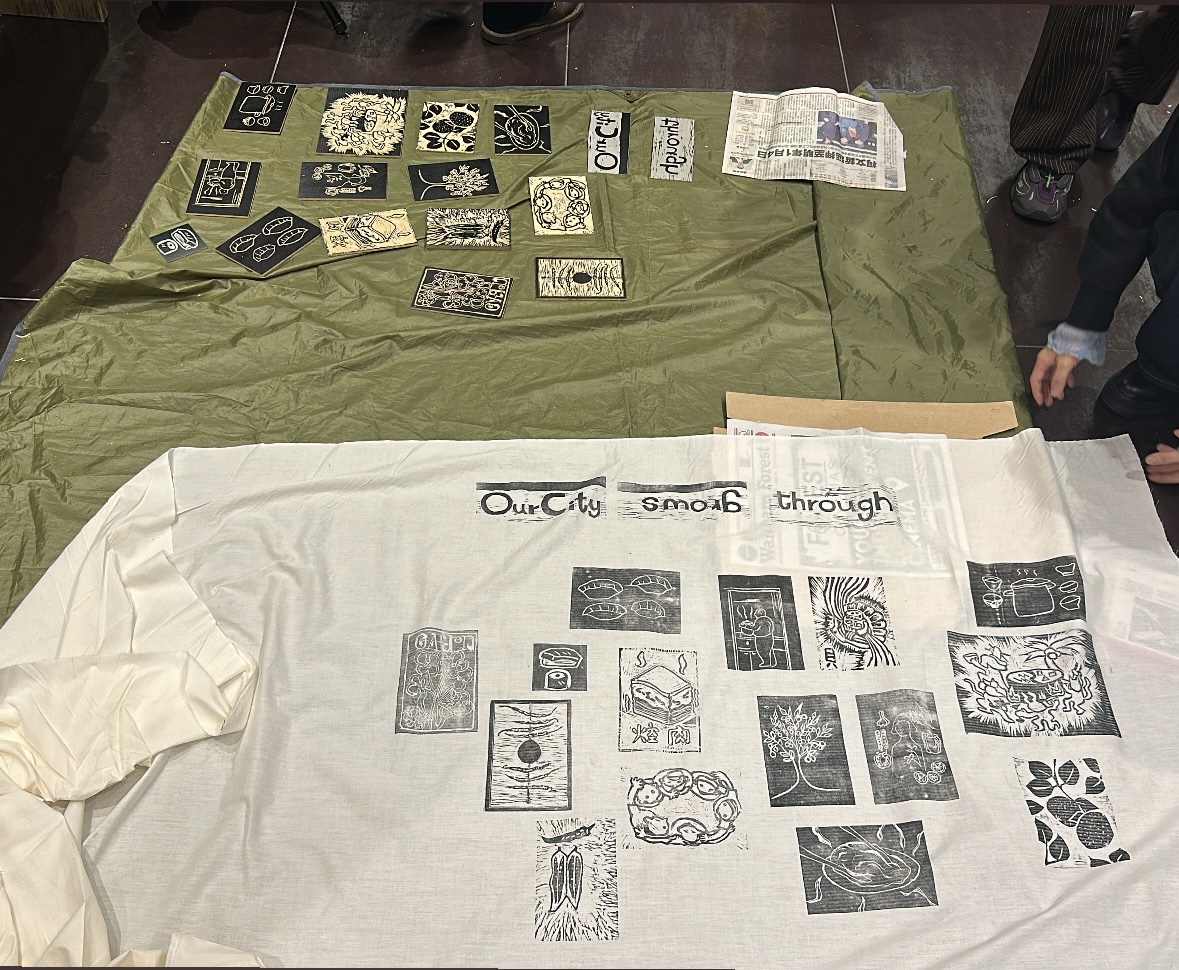
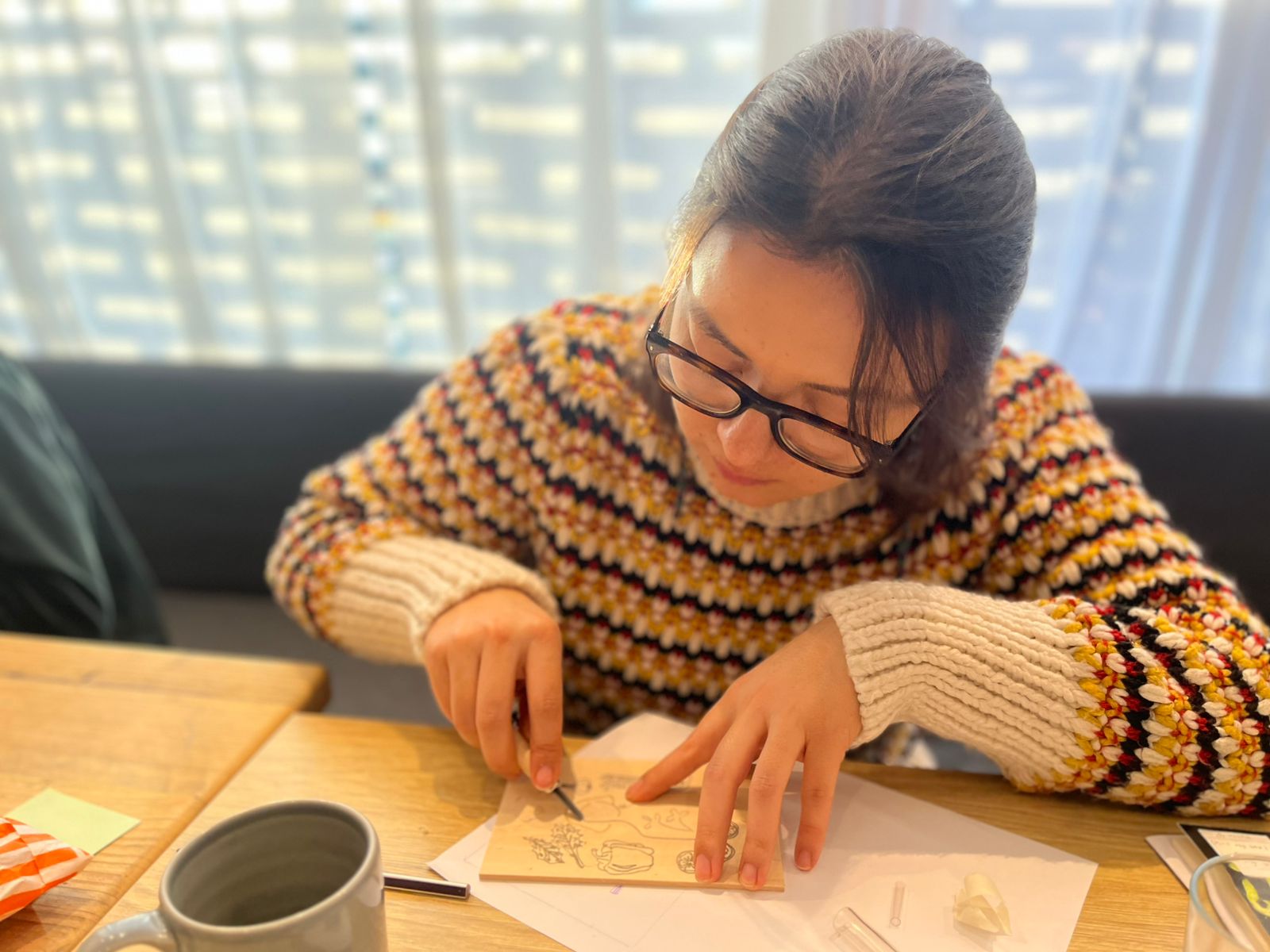
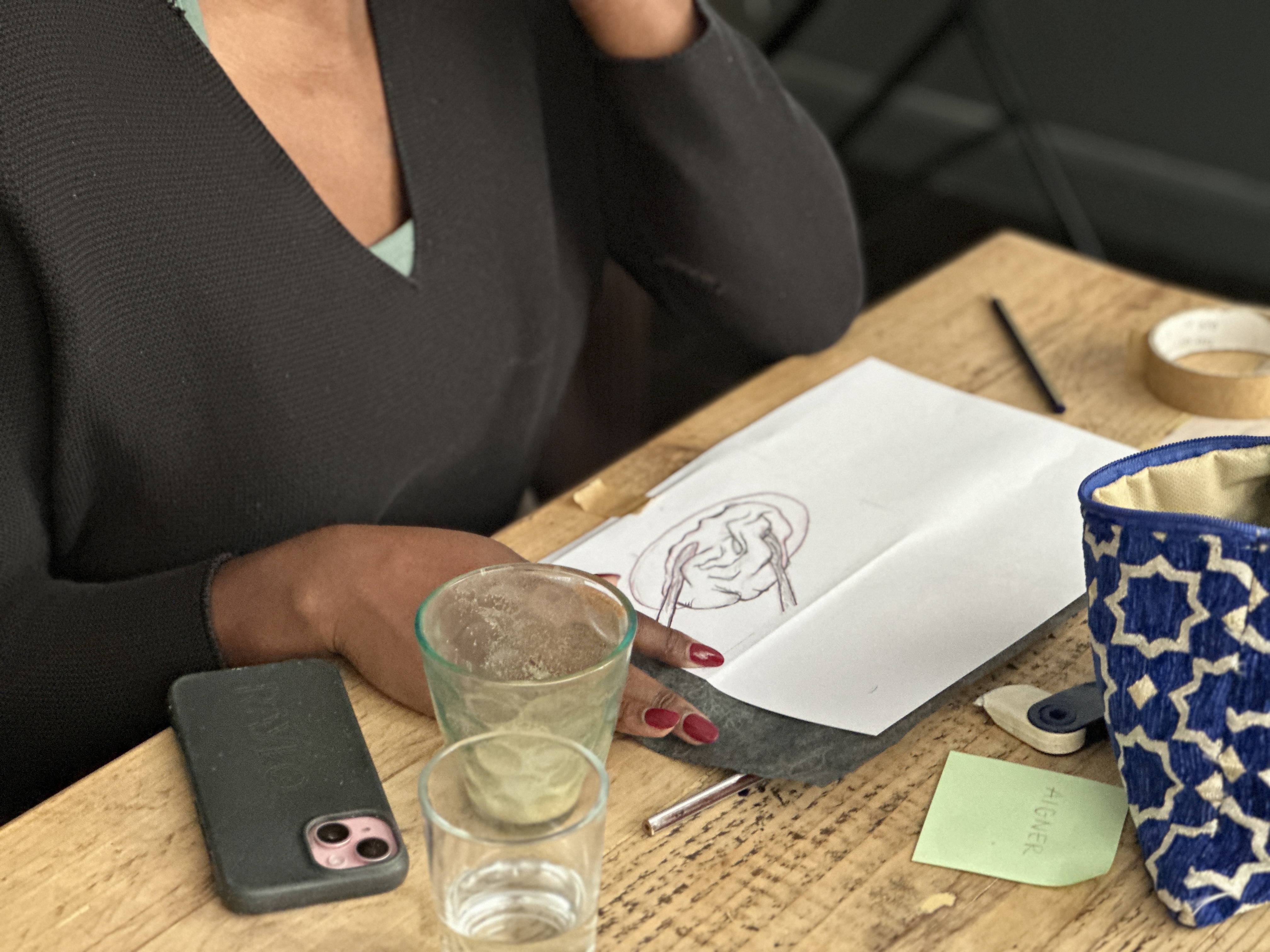
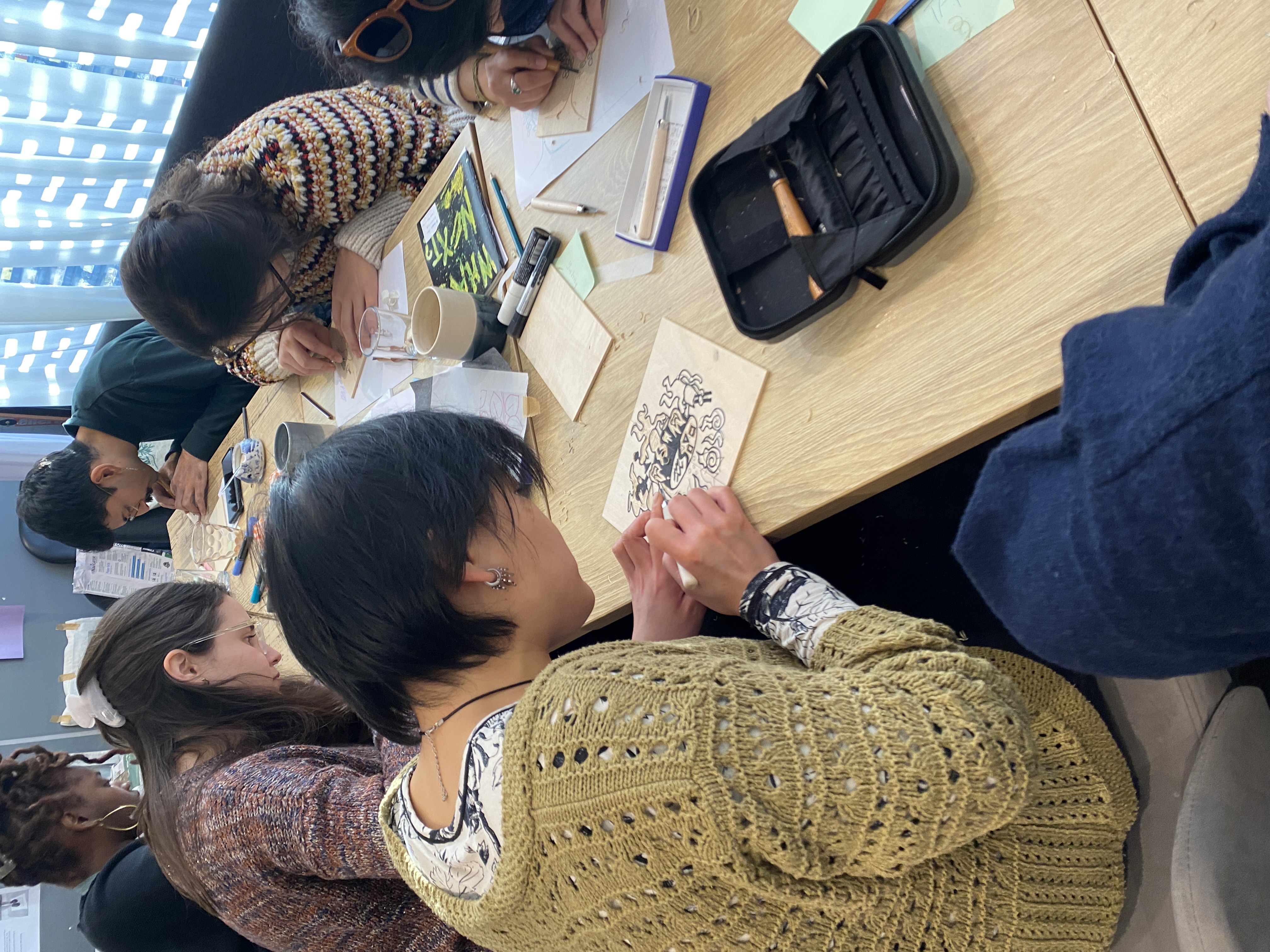
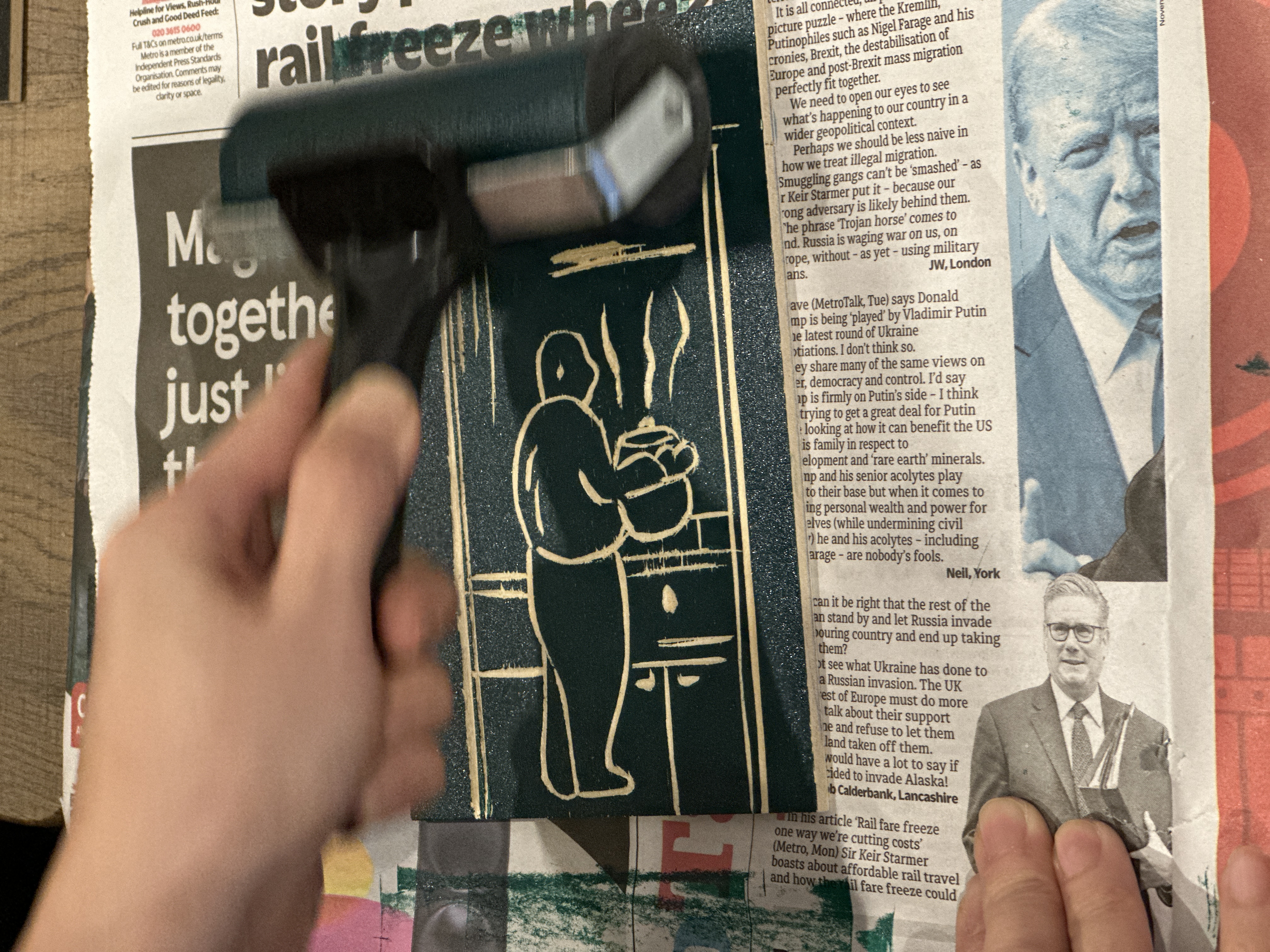
The second workshop focused on food as a way of thinking and remembering. Participants were invited to create prints inspired by a dish, ingredient, or table setting connected to their personal histories. Through carving and printing, food became a quiet language through which stories of care, memory, and belonging could surface. Individual images carried personal narratives, while the collective act of printing brought these stories into relation with one another.
Several participants from Hong Kong independently shared similar memories of making Slow-cooking soup(煲湯). Tara reflected: “The theme of ‘food’ makes me think of the person who cooks for us. Whether this person is a loved one, a chef, or a stranger, when they are cooking in the kitchen, we often only see their back or side—busy with the dishes, spreading care, love, skill, and passion through cooking.”
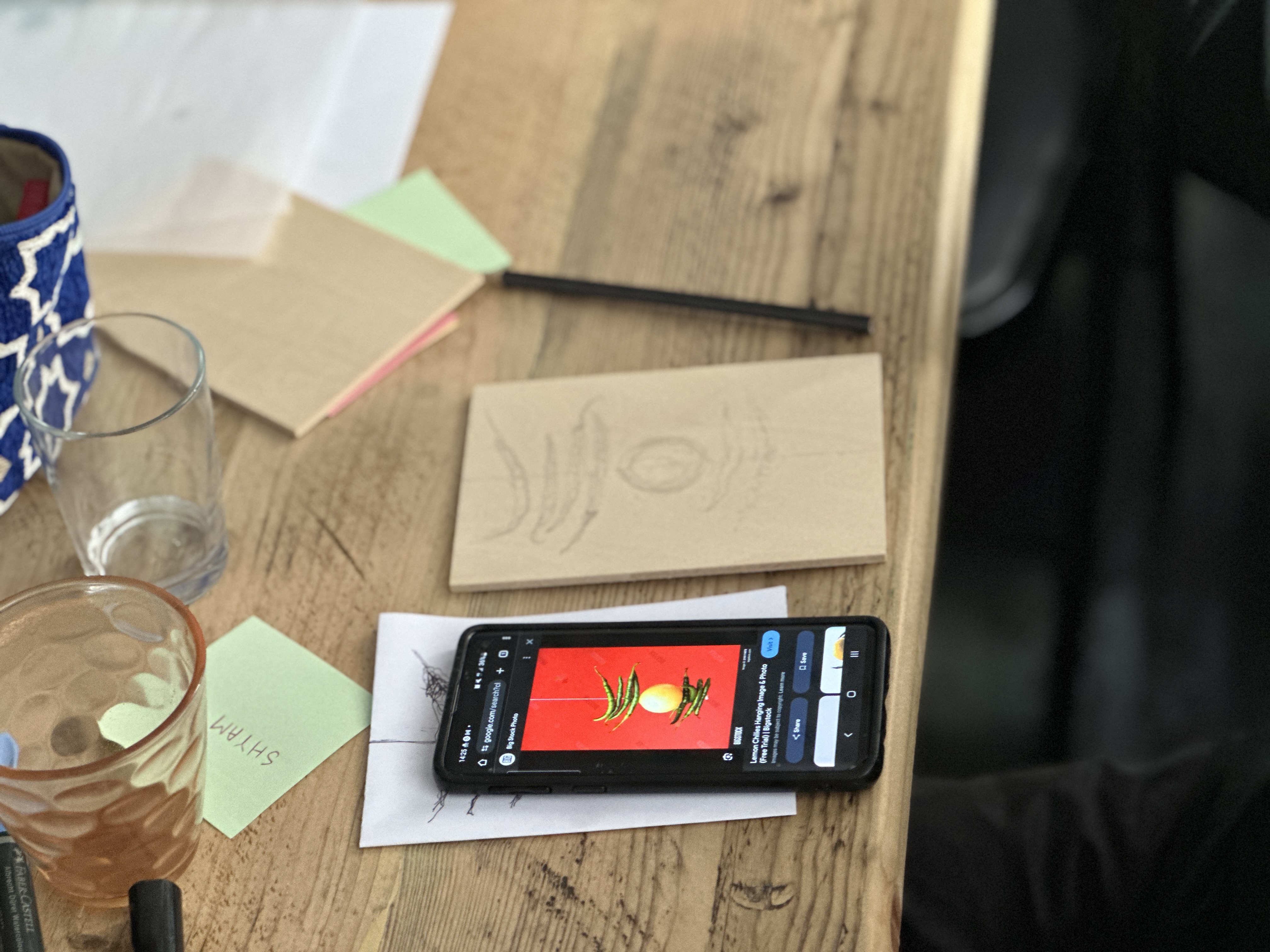
Another participant, Shyam—who had previously taken part in Print&Carve Dept.’s collective printmaking gatherings in Taiwan—shared a work inspired by dried chilli peppers. Hung outside the home, chilli strings carry cultural meanings of protection, warding off misfortune, and safeguarding both the household and the body.
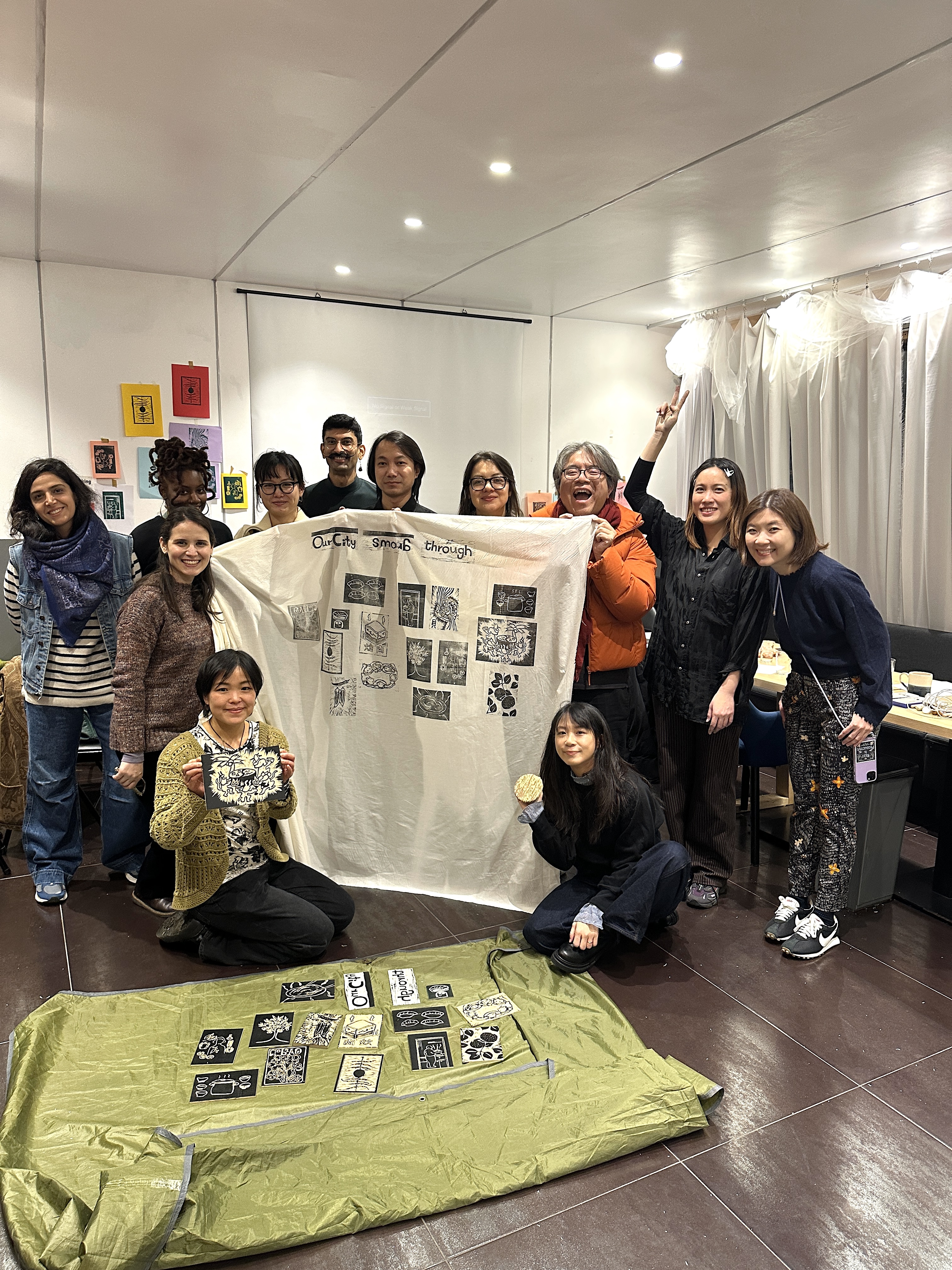
The workshops concluded with the collective printing of all works onto a large textile titled “Our City Grows Through…,” bringing together images and experiences into a shared visual field.
Reflections
Pulse & Pickle offered a working environment shaped by care, trust, and openness. By spending time with the team and becoming attuned to the everyday rhythms of the space, the residency unfolded as a process of mutual learning. What stayed with me most was not a sense of output, but the experience of being present—listening, exchanging, and learning alongside others.
The residency helped me articulate my working approach more clearly and situate my practice within the UK’s independent cultural ecosystem. More importantly, it reaffirmed how artistic research often grows through relationships: through shared meals, collective making, and conversations that take place over time.
I hope that the work developed at Pulse & Pickle can be presented within the community space as a continuation of these exchanges, remaining connected to the people and relationships that shaped it. This experience has reinforced my commitment to working attentively and in dialogue, allowing human connection to remain central to my practice across different contexts.
Notes
1.Pulse & Pickle: a community-centred space based in Walthamstow, London, working with food, care, and neighbourhood-based cultural activities.
2.Print&Carve Dept.: a Taipei-based artivism printmaking collective founded in 2019, focusing on collective creation and social engagement.
3.Collecting Tactics: an essay written by Johnny Chang in the context of art residency with Grafikens Hus, reflecting on community agency and collective artistic practice.
4.Time of the Rivers Fellows Sharing Session: an online public sharing session organised by Radical Ecology.
5.Pangrok Sulap: a Sabah-based printmaking collective; Rizo Leong is one of its co-founders.Comprising artists, musicians and social activists. Driven by punk ethos, empowering marginalised rural communities through art.
6.Print How: a Hong Kong–based printmaking collective founded in 2017.draws inspiration from groups such as A3BC in Japan. It brings together a group of friends who find mutual nourishment through printmaking.
7.Language & Translation: a local photography workshop organised at Pulse & Pickle.
滋養地景:食物、歸屬與共同探究——Pulse & Pickle 駐留計畫反思
在Pulse & Pickle¹為期三週的駐留期間,我參與了以過程為導向的探索,旨在探討女性主義、集體創作和研究驅動的藝術實踐如何在以社區為中心、仍在不斷發展的空間中成形。這次駐留讓我得以放慢腳步,專注於工作節奏、共同探討的問題以及促成合作的條件。
我的藝術實踐源自於女性主義城市研究、社區探索以及被視為一種集體和政治語言的版畫創作。我通常透過長期的創作過程來進行工作,重視傾聽、對話以及將生活經驗細緻地轉化為視覺和參與式形式。參加這次駐留計畫時,我思考當這些工作方式置於不同的社會、文化和空間背景時,對我來說會是一種挑戰,我可以如何調整以使過程順利進行。
基於社區的版畫實踐作為方法
我的創作方法源自於參與版畫團體印刻部²後的集體版畫創作模式,透過探討城市與社會狀況、記憶和集體行動的展覽和工作坊,版畫逐漸超越了單純的媒介成為一種合作方式,一種支持共同創作、開啟對話和集體反思的方式。
在駐留期間,我重讀了 Johnny 的文章《典藏戰術》³(暫譯,原名:Collecting Tactics)。 Johnny 曾來台拜訪印刻部,並參與塭仔圳家的組成工作坊,這篇文章是他為國際駐村計畫撰寫的。他寫到參與工作坊的經驗,提到關於如何透過藝術實踐維繫社區行動和集體力量的思考,在我整個 Pulse & Pickle 駐留期間都一直縈繞在腦海中。這篇文章探討了集體版畫如何支持自下而上的記憶建構和政治想像,尤其是在參與式工作坊中。這些理念為我反思自身創作方法提供了有益的參考。
此外,我還在線上參加了由 Radical Ecology 組織的「河流時代」⁴(暫譯,Time of the Rivers)分享會。它強調受這些項目影響的社區的真實經驗和韌性,超越了簡單的環境保護主義,探討了社會和政治層面的問題。在總結反思環節,同為版畫集體創作團體 Pangrok Sulap⁵ 共同創辦人 Rizo Leong 在分享了他對於未來實踐是否能夠建立社區美術館的想法,也與 Johnny 在 Collecting Tactics 對社群能動性的思考不謀而合,也幫助我更好地思考藝術創作過程如何保持開放、共享和紮根於特定地域的方向。
在 Pulse & Pickle 發展工作坊
隨著工作坊的逐步成型,我既考慮了倫敦的整體環境,也試圖了解沃爾瑟姆斯托(Walthamstow)社區的獨特性。這個街區深受移民、日常市集和附近濕地的影響,為思考身分認同、記憶和關懷等議題提供了豐富的背景。Pulse & Pickle 作為一個透過食物將人們聚集在一起的社區型空間,我圍繞著兩個相互關聯的主題來發展工作坊討論的主題:多元身分和來自家鄉的食物。
在關於多元認同的工作坊中,我與移居英國的曾參與香港版畫團體「點印社」⁶的成員Nata合作。透過藝術家講座和共同主持,我們交流了在不同版畫團體的工作經驗,並探討了在不同脈絡下如何看待移民和勞工議題。這些對話凸顯了相似的集體結構如何因其社會和文化環境的不同而呈現出截然不同的政治和方法論意義。
在此期間,我還參加了由 Pulse & Pickle 的營運者之一 Zohren 組織的本地攝影工作坊「語言與翻譯」⁷。透過與參與者,特別是那些在本地食品體系社區市場工作的 Ana 的交流,我開始更深入地思考語言、移民和日常基礎設施之間的關係。漫步在沃爾瑟姆斯托市場的探索體驗。長長的攤位,販售食物和日常用品,讓我想起了家鄉台灣嘉義附近的一個類似的街市,讓我意識到這些空間往往是早期歸屬感和自我認同開始形成的地方。
在藝術家講座之後,參與者 Rebecca 提出了一個問題:「印刻部與點印社介紹了很多在台灣和香港關注移工權益的議題,那在倫敦你們怎麼想」?這個問題縈繞在我心頭許久,除了位於亞洲的台港對比倫敦的社會背景的巨大差異,這也促使我進一步思考,離散不僅是一種地理狀態,更是一種透過日常實踐——尤其是飲食——而塑造的體驗。烹飪、飲食以及購買熟悉的食材,都成為承載記憶、協商身分認同、並隨著時間推移逐漸重建歸屬感的方式。透過這些共同的飲食實踐,離散也可能成為一個持續的文化轉譯和關懷的過程。
關於「來自家鄉的食物」
第二場工作坊以「食物」作為探究方法。參與者受邀以一道菜、一種食材,或一個與個人經驗相關的餐桌場景為靈感進行版畫創作。在刻版與印刷的過程中,食物成為一種安靜卻深刻的語言,承載記憶、照護與歸屬感。個別作品形成視覺敘事,而集體印刷的過程則將這些故事編織在一起。
幾位來自香港的參與者各自分享了製作煲湯的相似記憶。塔拉感慨道:「『食物』這個主題讓我想起為我們烹飪的人。無論這個人是親人、廚師還是陌生人,當他們在廚房裡忙碌時,我們通常只能看到他們的背影或側臉——透過烹飪傳遞著關懷、技巧和熱情」。
另一位參與者夏姆(Shyam)曾參加版畫雕刻部在台灣舉辦的團體版畫創作活動,他分享了一件以乾辣椒為靈感的作品。懸掛在屋外的辣椒串承載著保護、驅邪避兇、守護家庭和身體的文化意義。
工作坊最終以將所有作品共同印製於一塊大型布料上作為結尾,作品題為 《我們的城市生長透過》(Our City Grows Through),將不同的印刻圖像與其背後的故事匯聚成一個共享的視覺場域。
反思
Pulse & Pickle 提供了一個以關懷、信任和實驗為基礎的工作環境。透過與團隊的密切合作以及對空間日常節奏的關注,駐留計畫逐漸演變為一個相互學習的場所。這次駐留經驗使我能夠更清晰地闡述我的工作方法,它促進了我對版畫、女性主義探究和參與式實踐如何在不同的城市、機構和社區脈絡中運作的持續研究。
未來也計劃將這次駐留的成果作品和過程反思帶回台灣的印刻部與友好社群展開對話,從而拓展跨脈絡的交流。我也希望在 Pulse & Pickle 創作的作品在其社群空間展出後,成為駐留過程的延伸,並支持持續的、基於地域的社區參與。
註解
- Pulse & Pickle: 位於倫敦沃爾瑟姆斯托的社區中心,致力於食物、關懷和鄰里文化活動。
- 印刻部 Print&Carve Dept.: 成立於2019年的台北藝術行動主義版畫團體,專注於集體創作和社會參與。
- 《收藏策略》:Johnny Chang 在 Grafikens Hus 藝術駐留計畫期間撰寫的一篇文章,探討了社區能動性和集體藝術實踐。
- Time of the Rivers Fellows Sharing Session: 由激進生態學(Radical Ecology)組織的線上公共分享會。
- Pangrok Sulap:位於沙巴的版畫團體;Rizo Leong是其共同創辦人之一。該團體由藝術家、音樂家和社會運動家組成,秉持龐克精神,致力於透過藝術賦能邊緣化的農村社區。
- 點印社 Print How:成立於2017年的香港版畫團體,靈感來自日本的A3BC等團體。該團體匯聚了一群朋友,他們透過版畫創作彼此滋養。
- Language & Translation:在Pulse & Pickle在沃爾瑟姆斯托舉辦的本地攝影工作坊。