Interview: No Limit Seoul 2017 hosts Sang-Hyun & Gi-Ung
31 December 2017
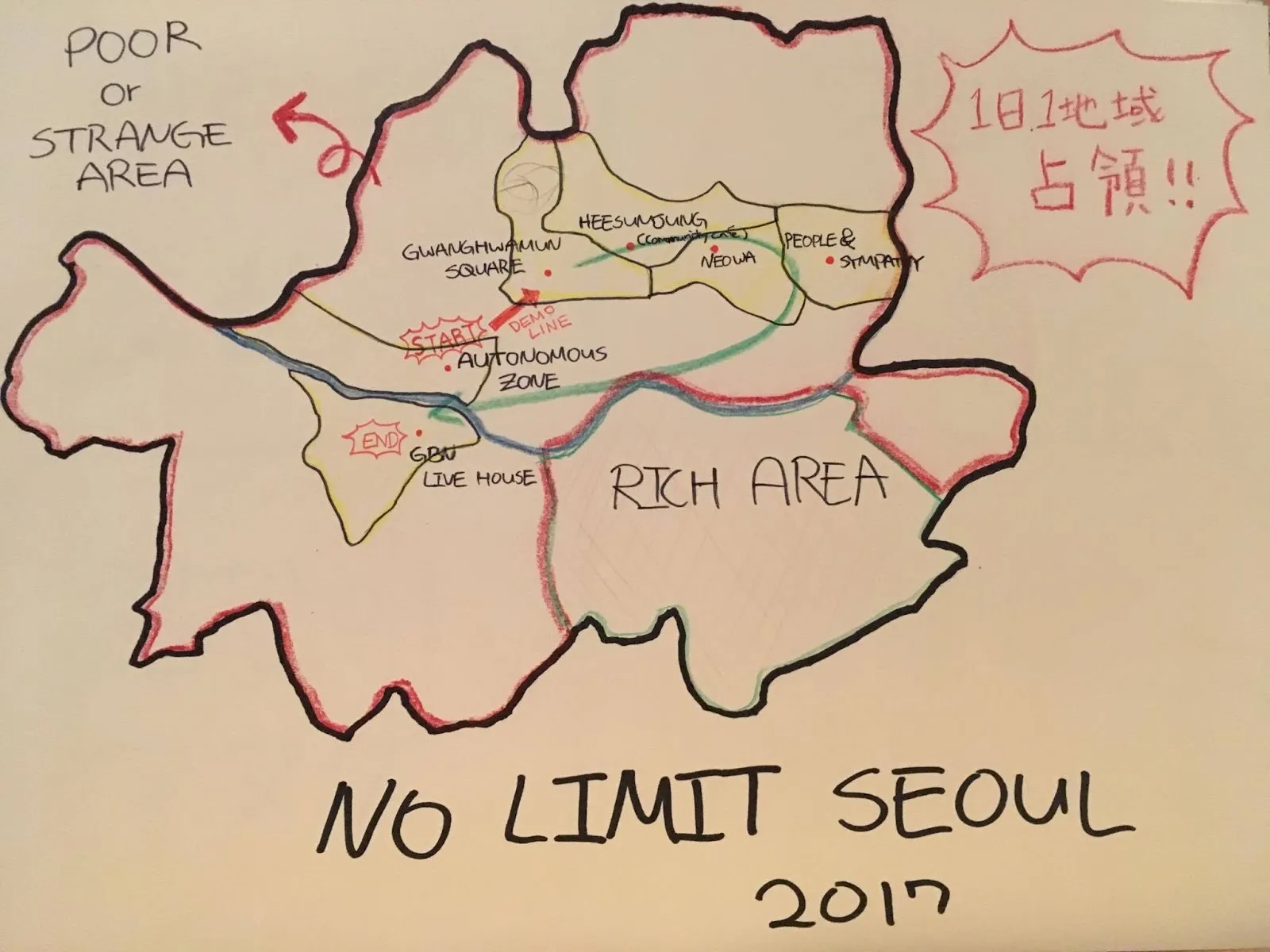
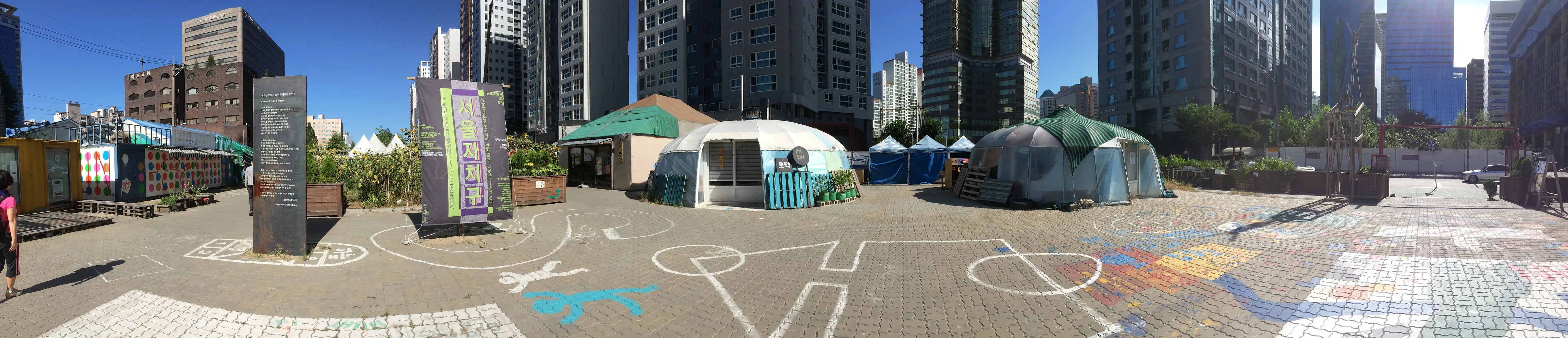
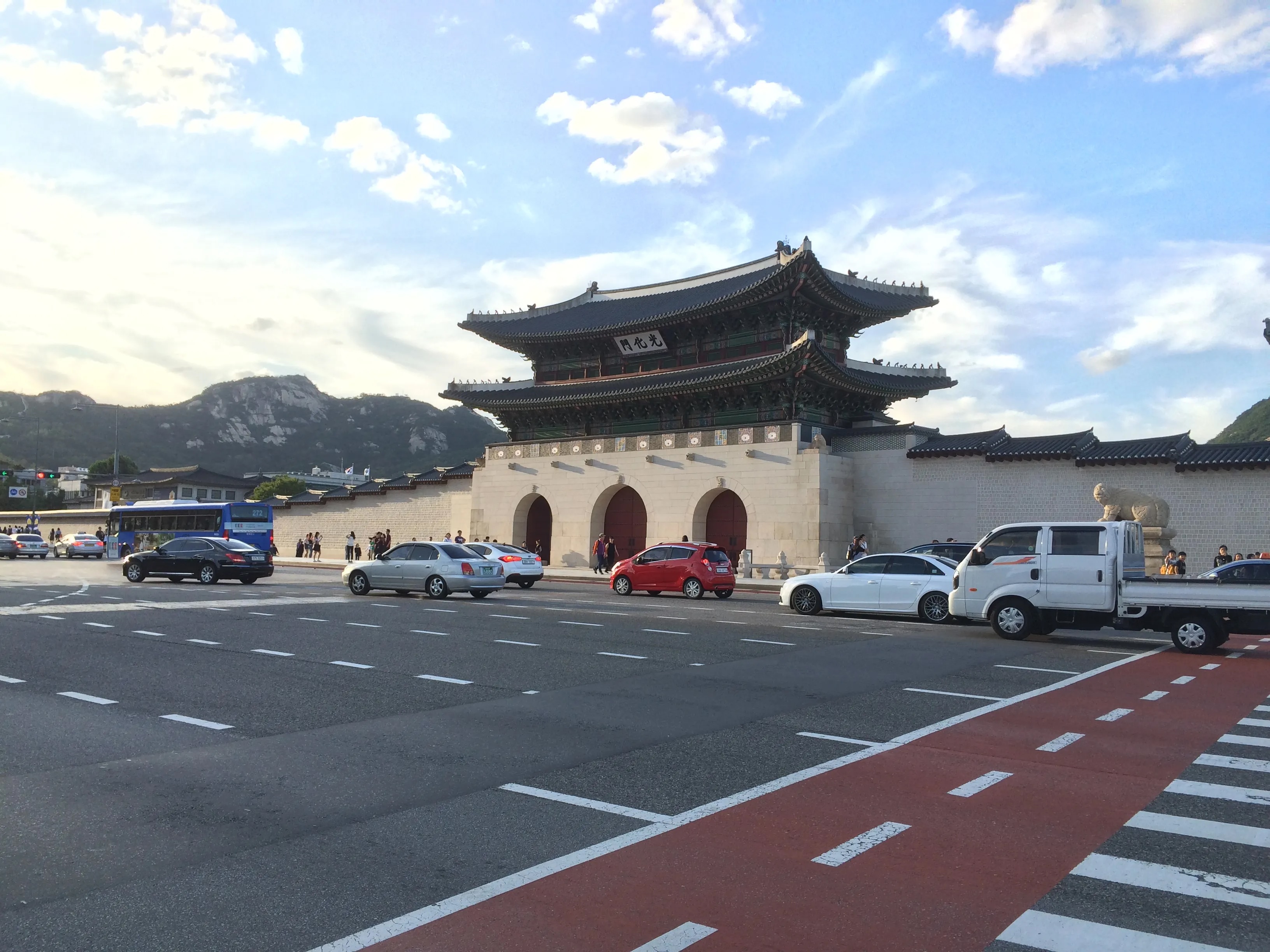
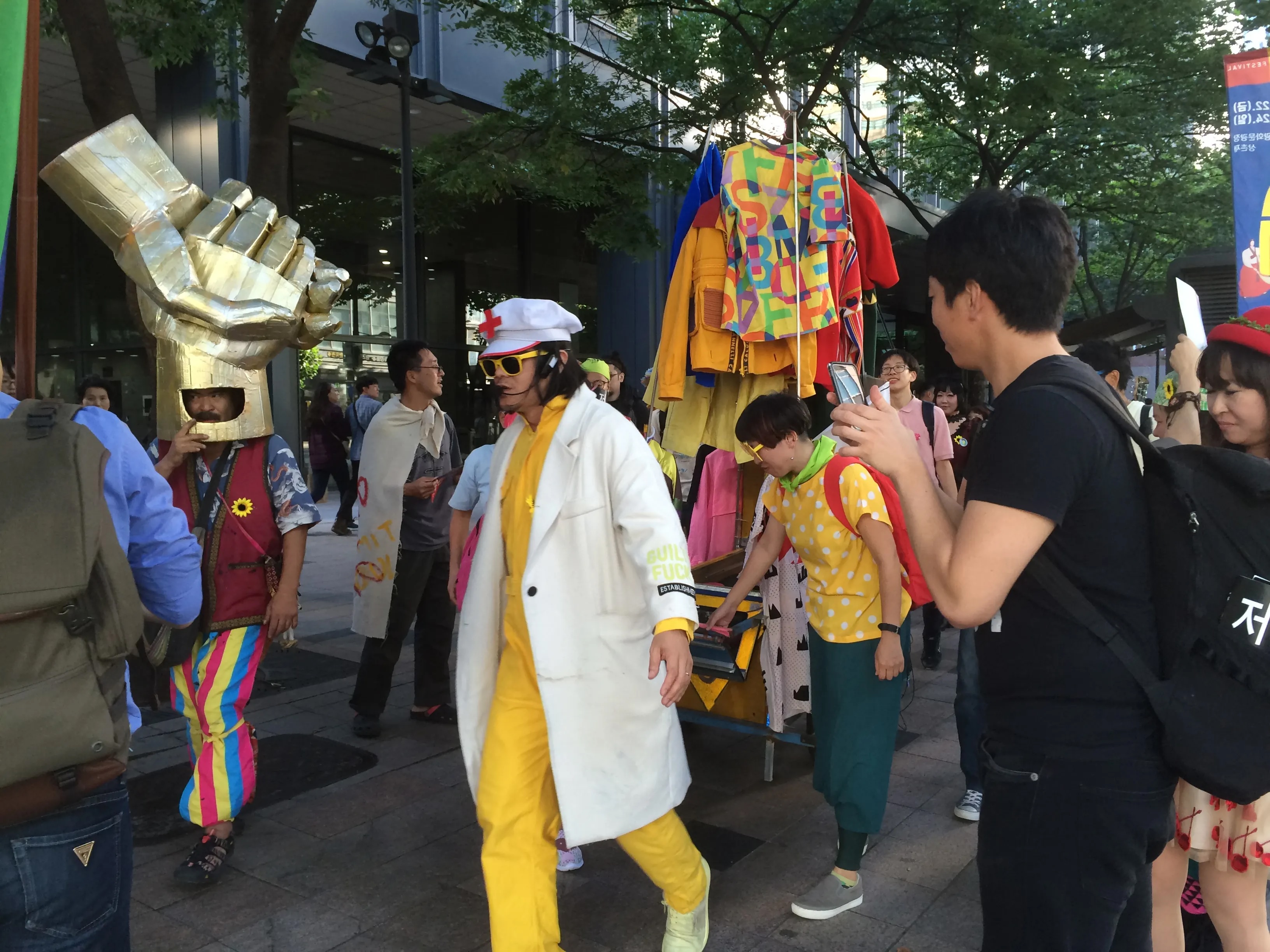
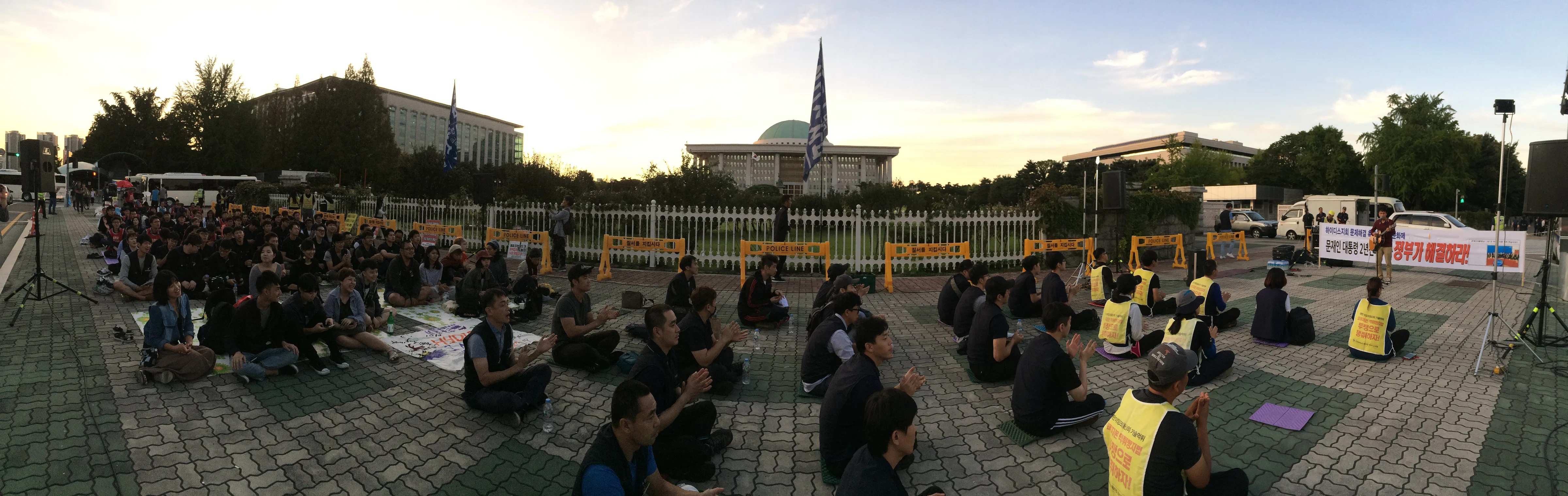
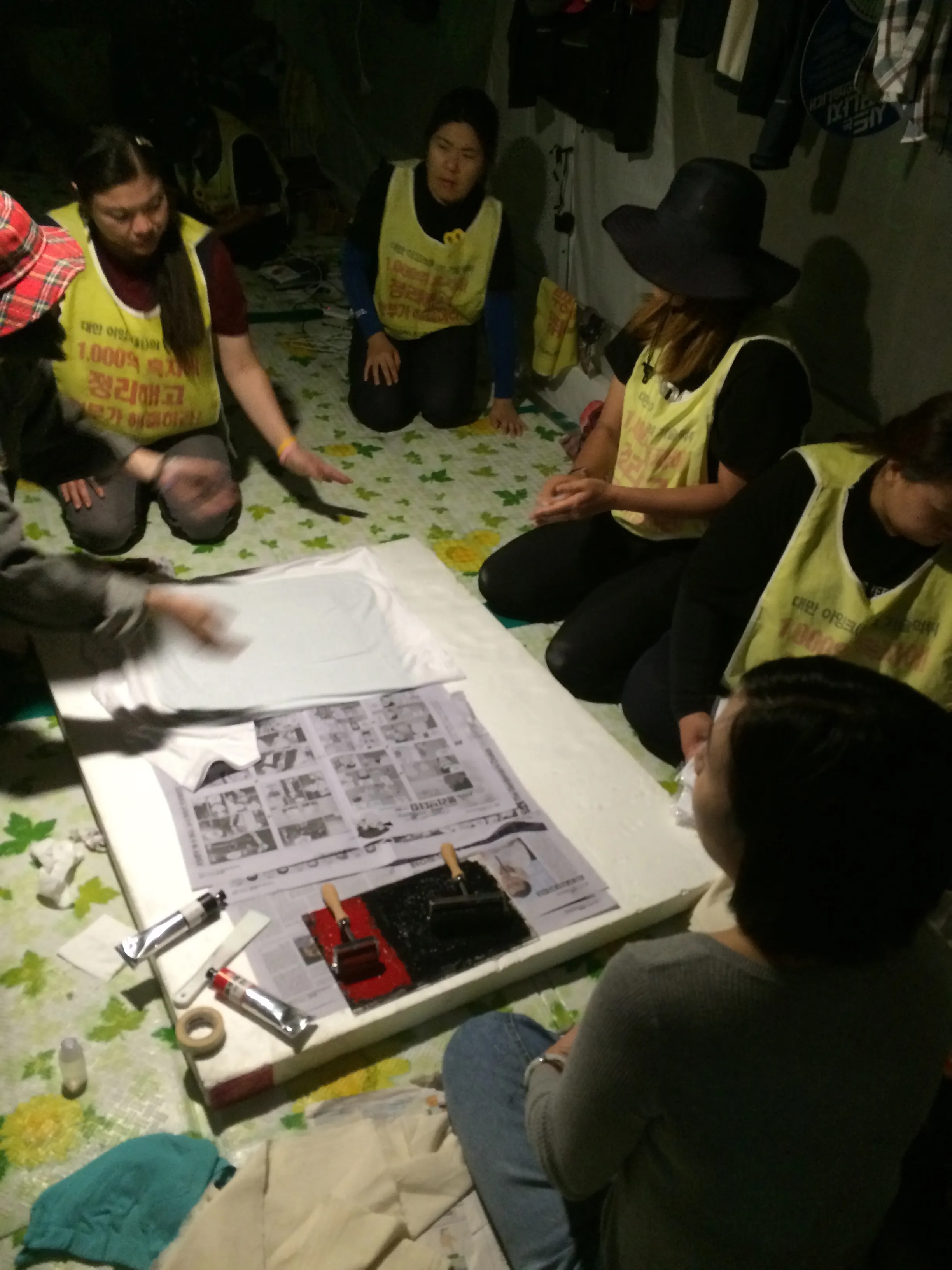
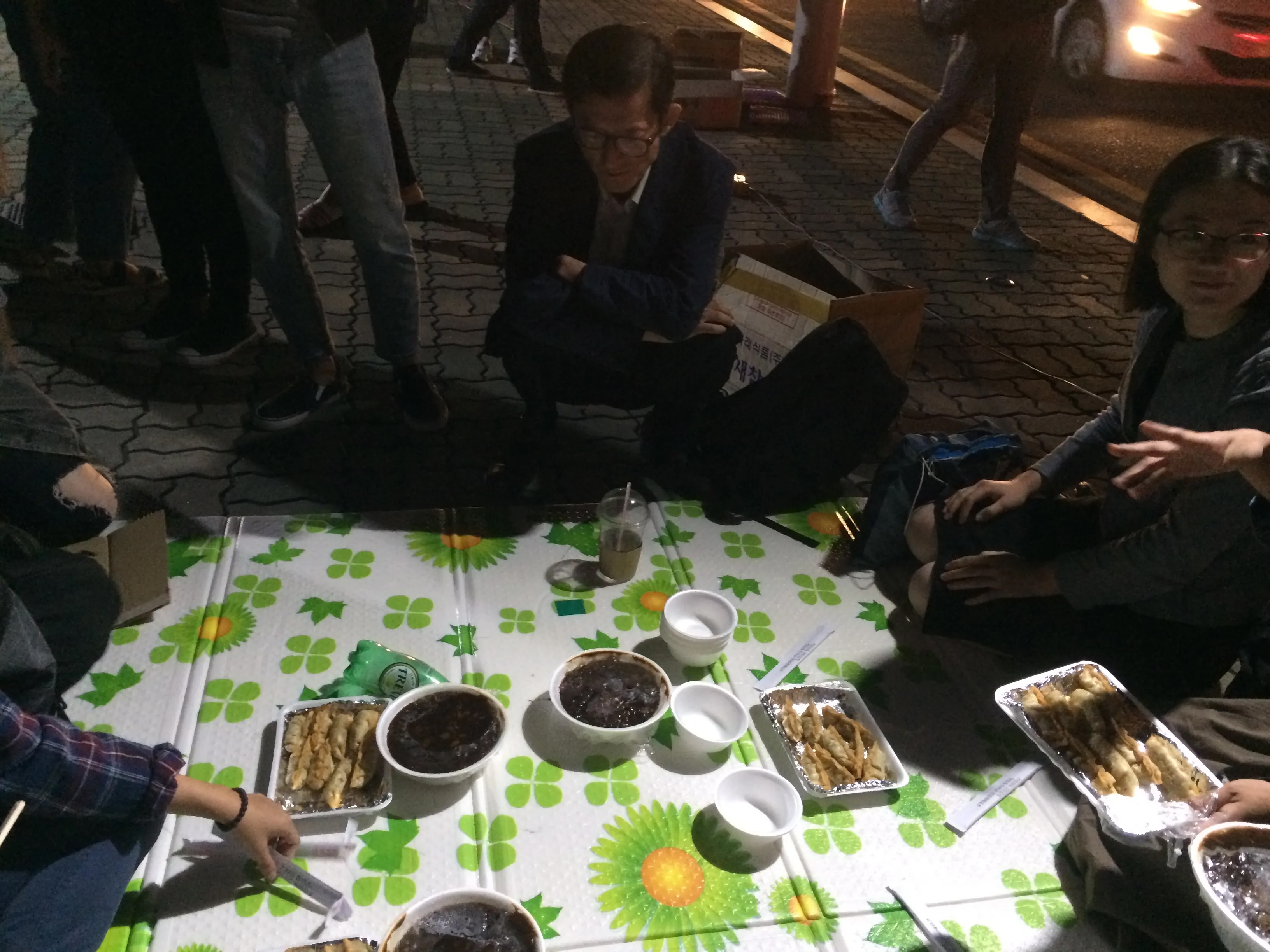
NO LIMIT SEOUL was an event held from September 15th to 24th, 2017, at multiple locations in Seoul and Busan. It was aimed at impoverished individuals, nerds, amateurs, and activists from various sectors across Asia who were concerned with politics and culture. The event included activities in front of embassies, various political alternatives and cultural spaces, and a music festival. It opposed phenomena such as urban redevelopment, gentrification, forced demolitions, sexual oppression, and the exclusion of minorities. It sought to promote cultural exchange and transnational solidarity among non-mainstream activists. I was participatied in this event and collaborated with other participants to observe and support the movement against commercially driven urban development and the forced demolition that oppresses human rights, held in Gyeongui Common Land in Seoul.
This interview was compiled by Huang Yu-ling and Liu Yun at the end of 2017, with answers from Korean organizers Sang-Hyun & Gi-Ung. It was discussed and participated in by all friends from Taiwan who participated in No Limit Seoul, and was translated and published in 2020.
Chinese version below.(中文在文末)
PREPARATION
Q1: What’s your job in Seoul? Why do you want to serve as the main event organizers of this event? Did you participated in 2016 NO LIMIT TOKYO last year? How will you two define No Limit Seoul?
A1: After Sanghyun graduates the university, since several years ago, she has been doing local community activities at Southeast part of Seoul. She thinks capitalism or government power suppresses people’s life, so she is trying to live to against it. she plans small film festival about minorities, feminism seminar, banding together with labor problem of temporary workers etc. and hosts event where local neighborhoods can play together.
It has been about one year since she has been working for youth activities. It is kind of part time job and outsourced by Youth Activity Support Center in Seoul. She thinks she was able to push forward the No-Limit initiative, because she was a ‘freelancer’ and the time was enough for her. She was not belong to anywhere for 5 days full time works, so she could take charge of the secretariat work. And she thinks it is because of the desire to promote No Limit.
We (Sanghyun and Giung) tried to exchange with Koenji since last year because Sanghyun thought they are making a kind of resistant life in their own way as known as ‘Amateur’s riot’. We visited Koenji and invited Matsumoto Hajime to hold exchange meeting. At that time we heard about No Limit Tokyo, and thought it would be great if we hold event like that. We couldn’t attend last year’s festival, but we learned about it through briefing sessions, video clips and direct introduce from Koenji friends. We think No Limit is DIY exchange festival that is made by paupers, amateurs and riots.
Q2: When did the preparation of this event started? How did you connect with Matsumoto Hajime and Shiroto no ran (Amateur’s Revolt) in Tokyo? How many time did you spend on communicating with Matsumoto Hajime and other spaces in Seoul? How did you communicate with each other?
A2:The first meeting of No Limit Seoul was may 20th 2017. At mid April, No Limit Tokyo group asked Sanghyun if we want to hold No Limit in Seoul. Sanghyun and friends answered, ‘OK!’, and it has begun quickly. After that there were meetings every 2 weeks. And at mid July, the secretariat was made.
We became close with Matsumoto Hajime and Amateurs riot through exchange meeting which was at last year’s fall. Sanghyun use mostly Japanese when she talk with Matsumoto Hajime. Because he doesn’t learn Korean… After may, Sanghyun has made conversation with Matsumoto Hajime through Kakao talk. With Korean team, Facebook massenger was used to share ideas and to make decisions.
Q3: When I chatted with Haemin Ryu before, she mentioned that there were a lot of people participated in the first NO LIMIT SEOUL meeting (when is the exact date?), but after the first meeting, lots of them decided not to participate. Can you describe the process of preparation? How did you two become the main organizers?
A3:The reasons why people who gathered at the first time quitted in the middle are we don’t know much about each other and meeting was not so exciting. There was not so many methods to break embarrassments at that time. And It was hard for people to understand the purpose of the event. There was people who was focusing on ‘resist’, and in the other hand on ‘excitement’. Well, Sanghyun who was holding meeting was not so famous person at remote area in Seoul. It was worried that we have no ‘key person’ such as Matsumoto Hajime. Not everybody quitted after the first meeting. Participation has decreased with less talks in the facebook messenger or not coming to meeting. Sanghyun and Giung have remained from the first time to the end of No Limit Seoul. Maybe that is the reason why they were the main organizers.
People who remain until the end of the event are the people who we visited and talked each other to keep making connections. Hahn Vad (Yamagata Tweakster) did not take deep part in the event. But after No Limit Seoul team has made direct contact such as visiting his bookstore opening event, common goals and relationship were created. Friends who were at the No Limit Seoul promotion event participated actively suddenly. So there could be secretariat team, interpretation team, and gender communication team.
DURING EVENT
Q4: As we’ve seen in the original project on website, No Limit Seoul is arranged with the “One day one area” method. Why and how did you decide to arrange events in this way?
A4:In Tokyo, Koenji community has a kind of central role. But in Seoul, people are doing their activities at separate areas where have little bit different characteristics. So No Limit Seoul team thought it would be better not to decide a central place, but introducing various areas by utilizing their features: Munraedong as live performance area, Mapo·Hongdae as resistance area against redevelopment, downtown·Gwanghwamun as demonstration area, Heesumjung as community culture area, Northeast Seoul as resistance scholarship area.
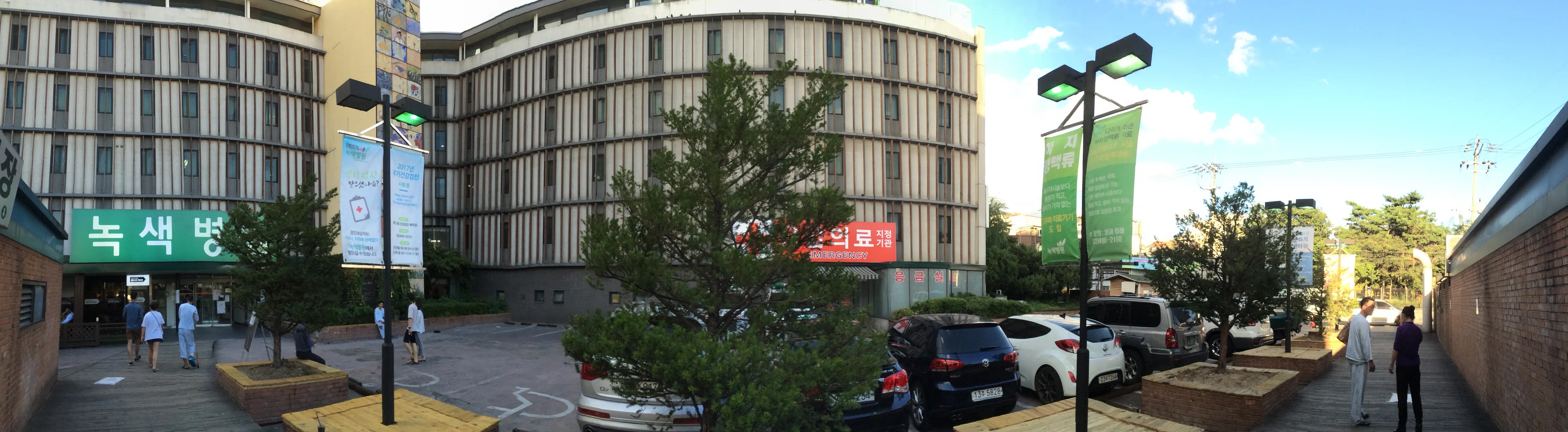
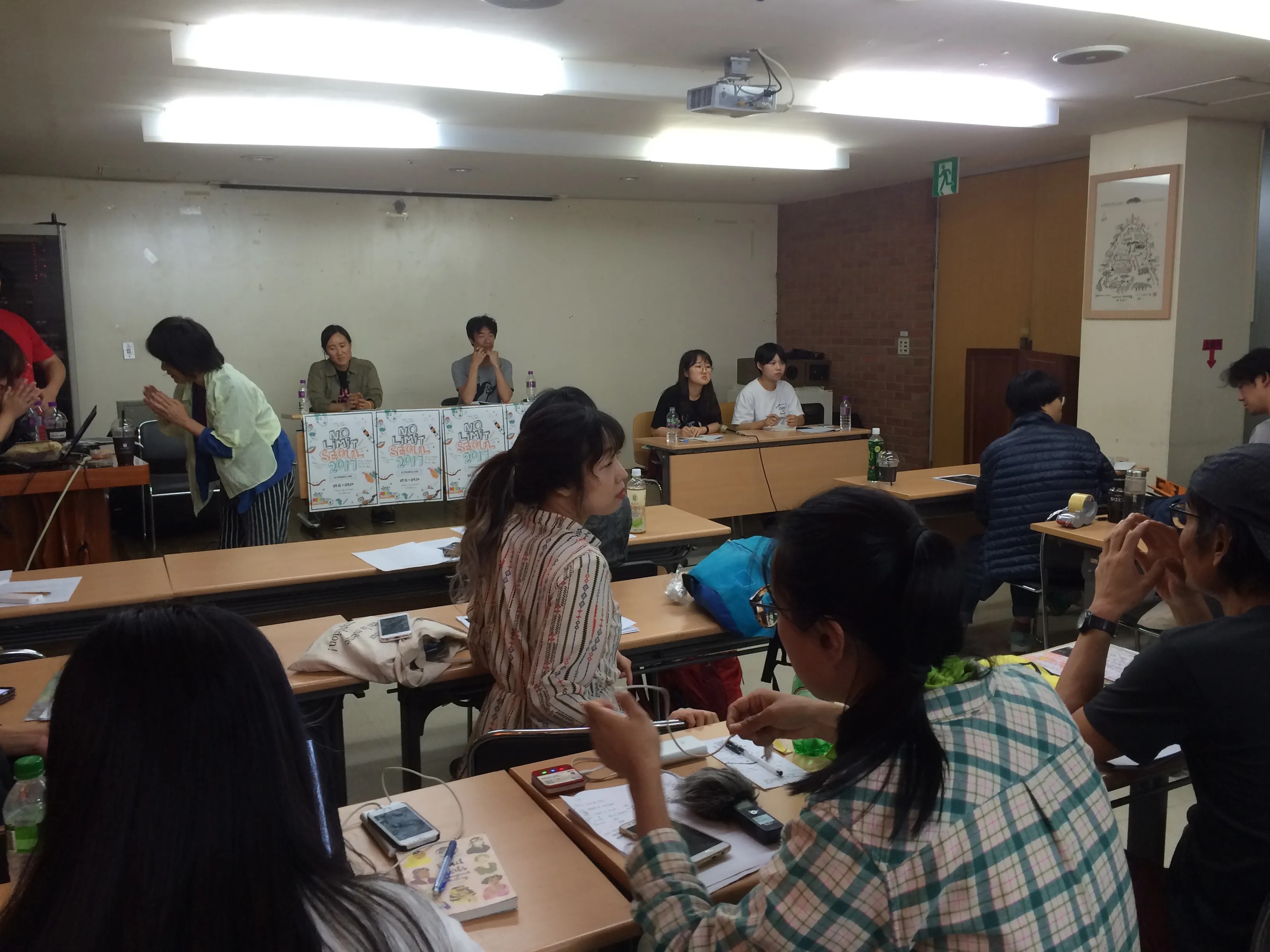
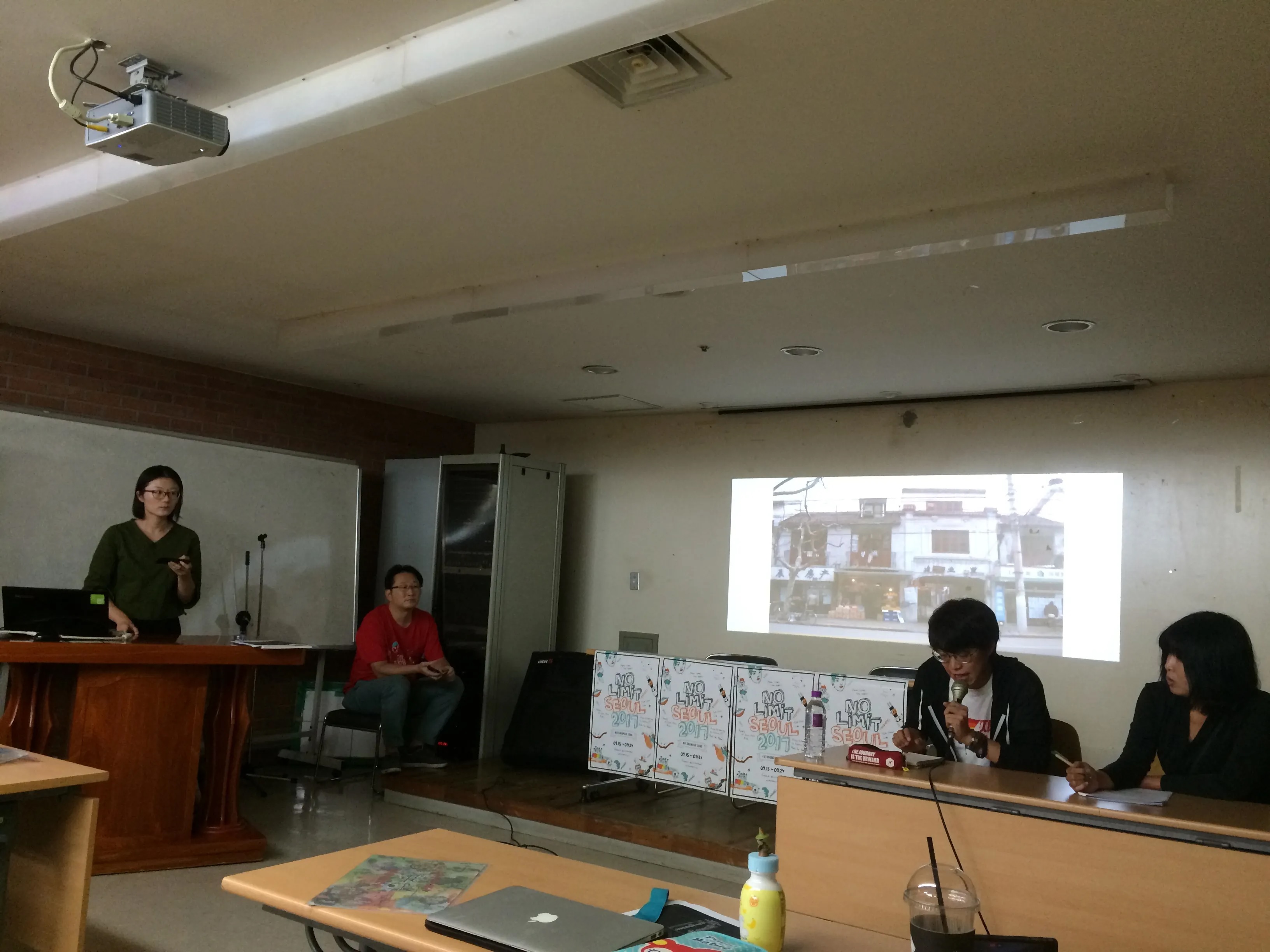
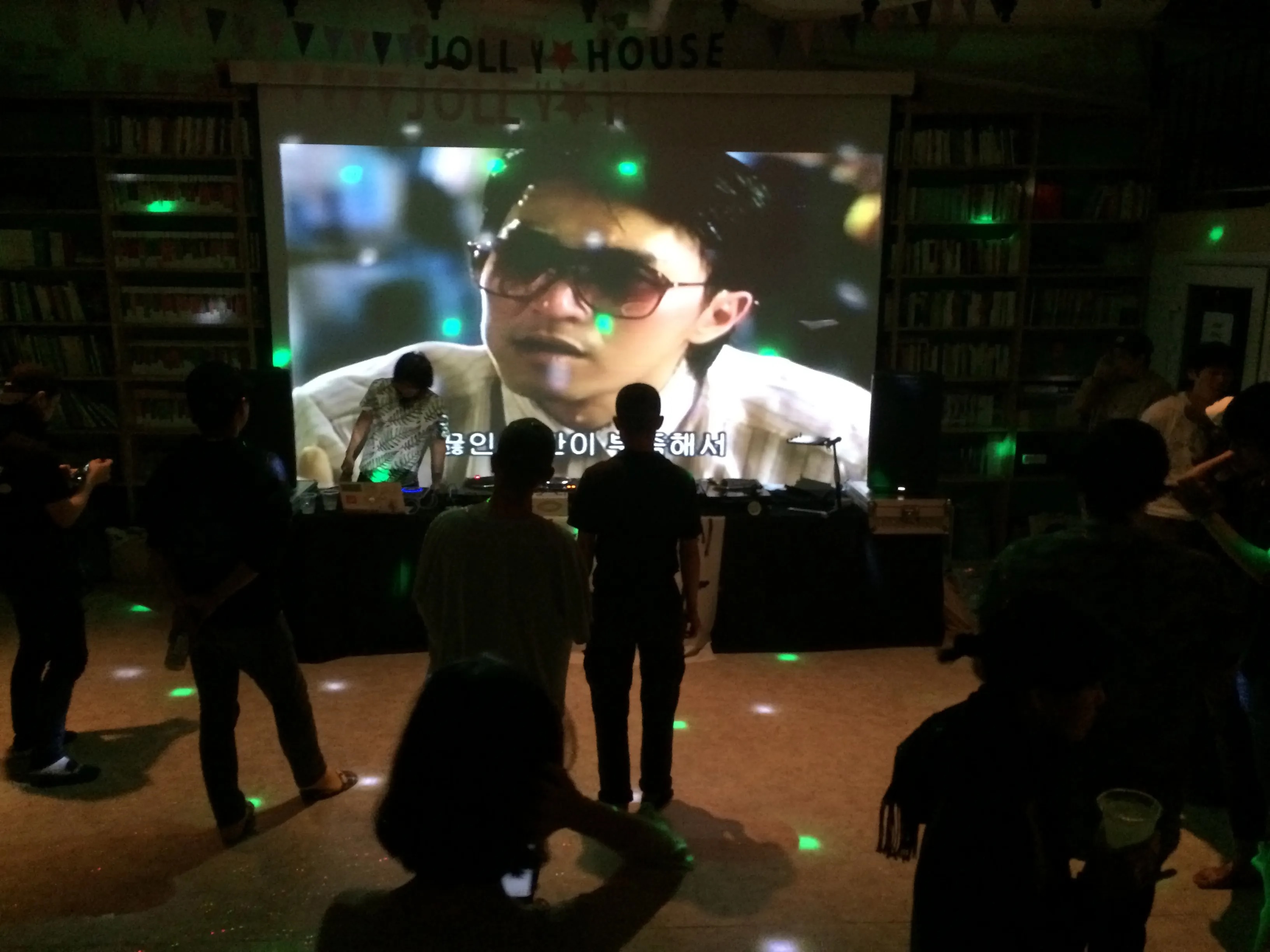
Q5: We’ve been to so many different spaces during the 10 days, and we are curious about those space. For example: Gyungui line Autonomous zone、Green Hospital and Jolly House (The master of Jolly House collect so many Stephen Chow’s Video). Can you introduce what you’ve know of these spaces? why did you choose these places?
A5:First of all Gyunguiline autonomous zone was introduced by Gyung Ha Hwang in independent music creating union. He was taking part in managing and holding event there, so he connected the zone and No Limit Seoul actively. People from Gyunguiline autonomous zone was active and very interested in events in No Limit Seoul, and helped a lot. Because of their help, No Limit Seoul could proceed events such as Autonomous zone summit and having press conference in front of Embassy of China. Gyunguiline autonomous zone is a cool place that people who expelled in Mapo where gentrification is extreme declared autonomous zone and making various events which resist redevelopment flow.
Because Sanghyun was doing local activities, she could talk with the director of Green hospital about No Limit. And local society’s atmosphere was positive for No Limit: ‘Let’s help actively. Young people are doing something’. So, Green Hospital lend the place and gave medical care for free. Green Hospital is a hospital where workers who have suffered from industrial accidents collect funds to create a foundation and actively support the from small to big problems in the local area.
Not only green hospital, but also the village communities and people who are doing social movements in the Jungrang area in the northeastern part of Seoul where Sanghyun lives and active helped a lot. They actively lend space and collected donations.
With Jolly house, it was connected at Matsumoto Hajime’s ‘Independent grand operation of paupers’ publication event. At there Sanghyun met Bareum from Jolly house and Bareum joined to No Limit Seoul secretariat team. Jolly house was cheering and supporting young people who want to create their own culture, so there was common sense each other. The place also support teenager’s cultural activities and neighborhood’s community activities in Munjeongdong where is poor area although it is in Gangnam the wealthy area. Also, the operators of this place have a history of fighting against the demolition of the area in the past.
Baream is fanatic fan of Stephen Chow, and He has a collection of all his works. It is a digital age nowadays, but analogue seems to be more like his taste. In Koenji, radio broadcasting is being carried out not by digital but by analog radio. It seems that there is a feeling that the method is ‘unique’.
The rooftop paradise (DRP) in Dongdaemun was able to visit and introduce the no-limit and planned the event together because Sanghyun and Giung met in the youth space discussion forum in the past. The DRP is a group of ‘public artists’ who works on the rooftop of the shoe wholesaler building in Dongdaemun to recycle the city in a creative way and create a community. Their activities have also been introduced in Korea’s public education broadcast, Knowledge Channel e-.
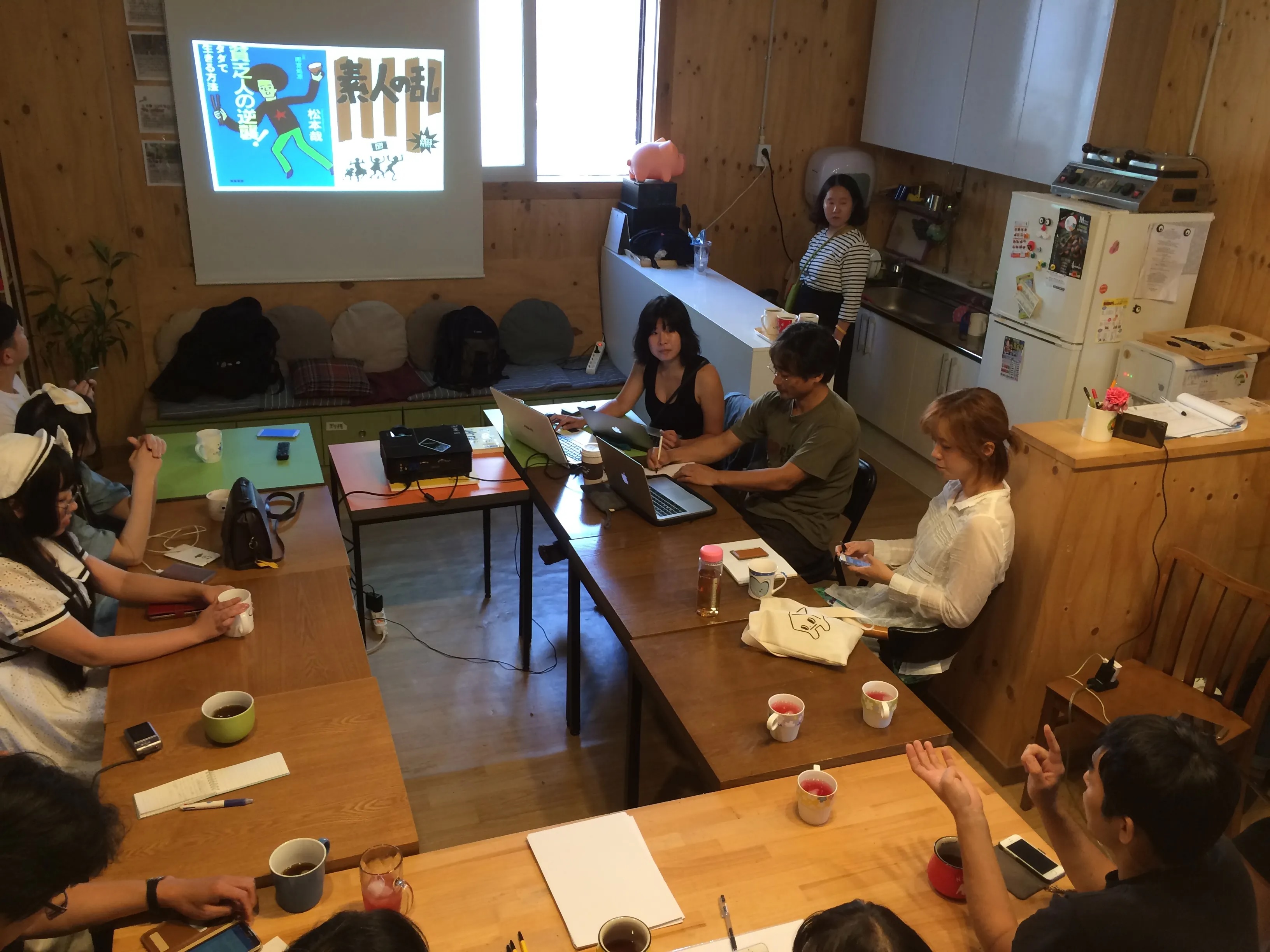
Q6: In the fulfilling, busy and overworked 10 days, what are the most impressive things in your memory? What is your favorite part?
A6:The most impressive moment is the main event, ‘This and that denounce rally, the ‘Amateur Poverty Forum’, the Munraedong GBN and Dasoyu’s live, opening and closing events. Cooking party at DRP and Grand discussion about indie·people·independent music and revolution at Yamagata Tweakster’s bookstore were also very good. It was really impressive because the participants from Taiwan, Japan, and China spoke actively and made discussion. It was very sorry that the conversation time was shortened because of the interpretation problem. It was very impressing when there is place and people gathered, they just enjoyed eating, drinking and exchanging even if there was no events. It seems that the participants’ desire to be gathered together without being separated from each other was also very strong.
Q7: Except the dispute mentioned in question 3, is there any other dispute and challenge during No Limit event? How did you handle it? What’s the most difficult part?
A7:It was a very painful, that there was a ‘event boycott’ through EVERNOTE on ‘sexual objectification comment’ that occurred in the chat room of Tokyo participant’s side. Because it was impossible to resolve conflicts through conversations, opinions passed in the form of ‘writings about stance’. And it was really hard because of the pressure to do something in a time that was not enough to selt solution point and make some change. As a result, what meaningful was, gender communication team was created and made equality agreement(guideline) which leads to agonize over more equal culture.
AFTER EVENT
Q8: About funding, how much does this event cost in total? How is it used? Did you receive any sponsorship? At the end, do you make end meets? If so, how will you use it? If not, what do you plan to do to make end meets?
A8:
- Income: selling T-shirts, goods, donations from local communities and friends, and event entrance fees.
- Outcome: making goods, payment for musicians, borrowing equipment.
We expected deficit at the first time, but because of the late donation and T-shirts were well sell. So fortunately, it became Neither surplus nor deficit! Thanks to friends who supported No Limit Seoul! (Accountant didn’t answer about the exact amount of budget, if he gives the information, I will share it immediately)
Q9: How will you define the spirit of NO LIMIT SEOUL? Does your idea about the event change before and event and after the event? What do you get from this event?
A9:Autonomy, and cooperation spirit. After the event ended, Sanghyun was regrettable that she thought it would have been better if she participated with a little more “enjoying” heart. She was stressed on time issues and events because she wanted the event to go smoothly. She wishes that she could have more relaxed approach.
Q10: Do you receive any feedbacks from the participants? Do you feel there was any room for improvement? If so, what is it? Also, what suggestions you will give to the organizers next time?
A10:Well, we don’t have any feedbacks after the event. But before the event there was a word ‘I think it will be damned’ came out because of various problems that arose. during the event, We think it is important to create an atmosphere at the beginning of the event. This No Limit Seoul did not have an atmosphere at the beginning, so the participation rate was lowered.
Any other experience and thoughts you want to share?
A:We were surprised that the interpreter team gathered as ‘volunteer’ was very good. However, as the participants of the No Limit Seoul came from various regions, it took a lot of time to translate them sequentially. We are wondering whether there is a better way to supplement this problem.
訪問:No Limit Seoul 到底在幹嘛?主辦人Sang Hyun & Gi-Ung 敞開心胸的詳實問答錄
NO LIMIT SEOUL 是於 2017 年 9 月 15 日至 24 日共10天在首爾和釜山的多個地點舉行的活動。面向亞洲不同領域關心政治與文化的貧窮者、書呆子、業餘者與暴動者。活動包含在大使館前、不同的政治性替代空間與文化空間並包含一場音樂祭,活動反對諸如城市改造、仕紳化、強制拆除、性壓迫、少數族群排斥等現象。力求跨國非主流活動者的文化交流與跨國團結。筆者直接參與了本次活動並與其他參與者合作,在首爾京義共有地舉辦台港反對以商業利益為導向的都市開發活動觀察與聲援壓迫人權的強拆運動。
本訪問由黃郁齡、劉耘於2017年底整理,韓國主辦人Sang Hyun & Gi-Ung回答,由台灣所有參與 No Limit Seoul 的朋友共同討論與參與。
活動開始之前
Q1.在首爾,你們原本各自的工作是什麼?為什麼會想成為這次活動的主辦人?你們曾經參與2016年在東京的NO LIMIT嗎?你們怎麼定義NO LIMIT這個活動?
A1:Sang Hyun大學畢業後幾年,她一直在首爾東南部做當地的社區活動。她試圖從生活中對抗那種被資本主義或政府權力壓制的生活,舉辦了有關少數民族的小型電影節、女權主義研討會,與臨時工的勞動問題結合的各種活動,讓當地社區可以一起玩耍。
她的工作是舉辦青年活動,已經大約一年了,這算是兼職工作,由首爾的青年活動支持中心外包。她認為自己能夠推動“NO LIMIT”計劃,因為她是一名“自由職業者”,時間對她來說足夠。她在5天的全職工作中不屬於任何單位,因此她可以負責秘書處的工作。她認為這是因為希望推廣“NO LIMIT”。
自去年以來,我們(Sanghyun和Giung)就試圖與高圓寺進行交流,因為Sanghyun認為他們以自己的方式過著一種抗拒的生活,即“業餘騷亂”。我們參觀了高圓寺,並邀請了松本哉參加交流會。那時我們聽說了 TOKYO NO LIMIT,並認為如果舉辦這樣的活動會很棒。我們無法參加去年的音樂節,但是我們通過講座介紹、影片和高圓寺朋友的直接介紹,了解了這一活動。我們認為“NO LIMIT”是貧民,業餘者和暴動組織的DIY交流節。
Q2.事前準備是從什麼時候開始?如何與松本哉及東京素人之亂群體串連起來的?在活動開始之前,行前(與松本哉及各個合作空間與團體)溝通花了多少時間?用哪些形式溝通?
A2: No Limit Seoul 於2017年5月20日舉行。在4月中旬,No Limit Tokyo 小組問Sanghyun 說我們是否要在首爾舉行No Limit?
Sanghyun和朋友答應之後很快就開始緊湊的準備,每2週召開一次會議, 並於7月中旬成立了秘書處。
通過去年秋天的交流會,與松本哉和這些業餘騷亂者變得越來越親密。 Sanghyun與Matsumoto Hajime交談時大多使用日語。 因為他不會學習韓文……五月後,Sanghyun透過Kakao Talk(一個線上溝通軟體)與松本哉溝通。 與韓國團隊一起,Facebook Massenger被用來分享想法和製定決策。
Q3:之前與Haemin Ryu聊天時,她提到過一開始籌辦 NO LIMIT SEOUL 第一場會議時有很多人參加(確切日期是什麼時候呢?),但當第一次會議結束後,就有不少人離開了。可否描述一路準備的經過?為什麼主辦人由Sang Hyun Panda Lee和Gi-Ung Park來做呢?
A3:初次聚會的人在中途退出的原因是我們彼此之間的了解不多,會議也不是那麼令人興奮。當時大家不熟都很尷尬。人們很難理解這次活動的目的。有些人專注於「抵抗」,有些人只想做一些「興奮」的事。嗯,正在開會的Sanghyun 在首爾的偏遠地區並不是那麼有名。擔心我們沒有像松本哉那樣的「關鍵人物」。第一次會議後,人們陸續退出了。參加人數減少的原因是Facebook Messenger中的對話越來越少或沒有參加會議。 Sanghyun和Giung從第一次到No Limit首爾結束一直存在。也許這就是他們成為主要組織者的原因。
在活動結束之前一直待在這裡的人就是我們互相拜訪並互相交談以保持聯繫的人。 Hahn Vad(Yamagata Tweakster)沒有在一開始就參加討論。但是在No Limit首爾團隊與他新開的書店聯絡之後,就建立了共同的目標。在No Limit Seoul 推廣活動的團隊間成為活躍的一份子,也因此我們團隊可以有秘書處、口譯團隊和性別交流團隊。
活動過程
Q4.我們在一開始的計劃書中有看到,這次NO LIMIT SEOUL分了幾區來舉辦一連串的活動,以「一天一個區域」的方式。為何以這樣的形式進行?
A4:在東京,高圓寺社區扮演著中心角色。 但是在首爾,人們分別在不同的地方舉辦活動,這些地方幾乎沒有什麼不同的特徵。 因此,No Limit Seoul 小組認為最好不要選擇一個地區當作活動地點,而是應該利用各區的特點讓人們認識不同地方的特色:文萊洞(Munraedong)作為現場表演區,麻浦區(Mapo·Hongdae)作為抵抗重建的地區,光化門廣場(Downtown·Gwanghwamun)作為示威區,Heesumjung作為社區文化專區,東北首爾為抵抗學術專區。
Q5.我們去了很多不同的空間,也對其中幾個空間特別好奇。像是京義共有地、綠色醫院和Jolly House DJ PARTY表演空間(空間主人收藏了完整的周星馳電影),可以介紹一下你們對這些空間的認識嗎?
A5:首先,Gyung Ha Hwang在獨立音樂創作聯盟中引介 Gyunguiline自治區加入。他參加了那裡的活動管理和舉辦活動,因此他積極地聯繫了該地區和No Limit Seoul。 Gyunguiline自治區的人們非常活躍,對 No Limit Seoul 的活動非常感興趣,並提供了很多幫助。在他們的幫助下,No Limit Seoul 可以進行諸如自治區峰會和在中國大使館前舉行的記者會。 Gyunguiline自治區是一個很酷的地方,聚集了在高度仕紳化後的Mapo區被迫遷過來的人,他們在那裡做了各種反對再開發的活動。
因為Sanghyun做了許多在地活動的關係,所以她可以與Green醫院的負責人討論No Limit,他們對 No Limit 這個活動積極的提供幫助,認為年輕人正在做有意義的事情,因此綠色醫院願意出借空間,並免費提供了醫療服務。綠色醫院是由一群工安意外的工人在這裡籌集資金開始,他們創建基金會並成為一間積極幫助本地大小急難狀況的機構。
Sanghyun居住和活躍的首爾東北部的Jungrang地區,不僅有綠色醫院,而且還有鄉村社區和從事社會運動的人,都為他們提供了很大幫助。他們積極地借出空間並募款協助。
它與喬利之家(Jolly house)在松本哉的「貧民的獨立大行動」出版活動中聯繫在一起。 Sanghyun在那會見了來自Jolly House的 Bareum,Bareum加入了No Limit Seoul秘書處團隊。喬利之家是為了「希望創造自己的文化」的年輕人所共同組成。這個地方還支援少年、兒童的文化活動以及在貧困地區文正洞的鄰里社區活動,儘管它位於富人區江南。另外,該地點的經營者在過去曾參與本地的拆遷抗爭。
Baream是周星馳(Stephen Chow)的狂熱粉絲,他收藏了他所有的作品。如今是數位時代,但類比(analogue)似乎更像他的品味。在高圓寺,廣播節目的進行也是透過類比而不是數位方式,估計更符合「獨特」(unique)的情懷。
東大門的屋頂天堂(DRP)能夠參觀並介紹No Limit活動,共同籌劃了此次活動,因為Sanghyun和Giung過去在青年空間論壇上見過面。 DRP是一群「公共藝術家」,工作空間座落於東大門的鞋批發商大樓的屋頂上,用創意方式回收城市並創建社區,也曾受韓國的公共教育廣播「e-知識頻道」採訪介紹。
活動之後
Q6:關於活動,在這個充實、忙碌、過勞的10天,過程中,有發生什麼事情讓你們印象最深刻的事情?你們各自最喜歡活動中的哪個部分?
A6:最令人印象深刻的時刻是主要活動,那場被譴責的集會:「業餘貧窮論壇」,Munraedong GBN和Dasoyu的現場、開幕和閉幕活動。 DRP的烹飪派對以及Yamagata Tweakster書店里關於獨立、民族、獨立音樂和革命的盛大討論也非常好。 來自台灣,日本和中國的與會者積極發言並進行了討論,這確實給人留下了深刻的印象。 很抱歉由於口譯問題而縮短了交談時間。 每當在各個據點,人們聚集在一個空間所產生的交流是讓人印象深刻的,即使沒有任何活動,人們也很樂於享受共食、喝酒和交換想法,看起來參與者都想盡可能的把握聚會的時間彼此交流。
Q7:除了第三題所提到的爭論,活動過程中有沒有發生其他的爭執和挑戰?當時如何處理?最困難的是什麼部分?
A7: 令人非常痛苦的是,在東京參與者的討論過程中,通過EVERNOTE對「物化女性的歧視言論(sexual objectification)」進行了抵制。 因為這樣的衝突無法透過線上對話解決,所以意見變成了各自宣告立場的戰場。 而且在活動籌備進行中的壓力變得特別困難,而這還不足以確保解決方案並做出一些改變。 最後有意義的解決方式是創立了性別交流團隊,並製定了性別平等協議(指南)。
Q8.關於經費,這次活動總共花費了多少錢?用在哪些地方?是否有收到哪裡的贊助?最後收支有平衡嗎?若有,現在打算如何運用,若無,打算怎麼補足?
A8:收入來自銷售T恤、周邊商品, 來自當地社區的捐款,朋友的幫助以及活動的入場費。 支出:周邊商品的製作費、演出費,設備租用費用。 我們本來以為活動會出現赤字,但由於最後的捐贈,和暢銷的T恤。 幸運的是,活動雖然沒有盈餘,也沒有赤字! 感謝支持No Limit Seoul的朋友! (會計沒有回答確切的預算金額,如果他提供了信息,我會立即分享)
Q9:你們覺得NO LIMIT SEOUL這場活動的精神是什麼?活動開始到結束後這段時間,對這個活動的想法有哪些改變?活動帶給你們的收穫有哪些?
A9:自治與合作的精神。 活動結束後,Sanghyun感到遺憾的是,她認為如果能更享受的心情參與這些活動就好了,因為她希望事件能夠按部就班順利進行,所以壓力很大,她希望自己可以放輕鬆一點。
Q10:活動後是否知道參與者對於活動的任何想法?有沒有覺得這次哪些部分有改進空間?你會給下一次的主辦方什麼建議?
A10:好吧,活動結束後我們沒有收到任何意見回饋。 但是在活動開始之前,由於出現了各種各樣的問題,所以參與這場活動被某些人認為是可惡的。 這場“No Limit Seoul”參與率較低源於沒有營造出開始的那種氣氛,因此我們認為在活動開始時營造氛圍非常重要。
其他想說的話、想分享的經驗?
A:我們感到驚訝的是,義務支援而招募到口譯團隊表現非常好。 但是,由於“No Limit Seoul”的參與者來自各個不同國家,因此溝通花了很多時間翻譯為各國語言,未來應該有更好的方法來解決這個問題。